Back

Cell Inclusions definitions

Control buttons has been changed to "navigation" mode.
1/14
  • Cell Inclusions

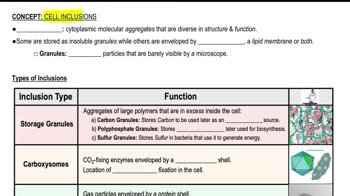
    Cytoplasmic molecular aggregates with diverse structures and functions, often serving as storage or specialized compartments in prokaryotes.
  • Granules

    Small, often barely visible particles in the cytoplasm, commonly serving as storage sites for excess cellular materials.
  • Storage Granules

    Aggregates of large polymers stored in excess, acting as cellular reserves for energy or biosynthetic needs.
  • Carbon Granules

    Intracellular reserves of carbon, used as an energy source when external supplies are limited.
  • Polyphosphate Granules

    Insoluble cytoplasmic stores of inorganic phosphate, later used in biosynthetic processes like nucleotide synthesis.
  • Sulfur Granules

    Cytoplasmic inclusions containing sulfur, utilized by certain bacteria for energy generation.
  • Carboxosomes

    Protein-enclosed compartments housing CO2-fixing enzymes, crucial for carbon fixation in many bacteria.
  • Gas Vesicles

    Protein-shelled structures containing gas, enabling cells to regulate buoyancy in aquatic environments.
  • Gas Vacuoles

    Larger cellular structures formed by clusters of gas vesicles, enhancing buoyancy control in prokaryotes.
  • Magnetosomes

    Membrane-bound chains of iron-containing molecules, allowing cells to align with Earth's magnetic field for orientation.
  • Protein Shell

    Protective layer composed of proteins, enveloping certain cellular inclusions like carboxosomes and gas vesicles.
  • Lipid Membrane

    Thin, flexible barrier of lipids that can surround some inclusions, providing compartmentalization within the cell.
  • Cytoplasm

    Gel-like internal environment of the cell where inclusions and other organelles are suspended.
  • Buoyancy

    Ability of cells to float or adjust position in aquatic environments, often regulated by gas vesicles.