Back

COVID-19 (SARS-CoV-2) definitions

Control buttons has been changed to "navigation" mode.
1/13
  • SARS-CoV-2

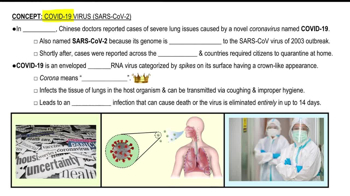
    A novel coronavirus responsible for the COVID-19 pandemic, genetically similar to the 2003 SARS virus.
  • COVID-19

    A respiratory disease caused by a novel coronavirus, leading to a global pandemic starting in 2019.
  • Pandemic

    A worldwide outbreak of an infectious disease affecting large populations across multiple countries.
  • Enveloped Virus

    A virus surrounded by a lipid membrane, which aids in entry into host cells and evasion of immune responses.
  • Plus ssRNA

    A single-stranded RNA genome with the same orientation as mRNA, allowing direct translation by host cells.
  • Spike Protein

    A surface structure on coronaviruses that enables attachment and entry into host cells, giving a crown-like appearance.
  • Crown Appearance

    A visual feature of coronaviruses due to surface projections, inspiring the name 'corona.'
  • Lung Tissue

    The primary site of infection and damage during COVID-19, leading to respiratory symptoms.
  • Transmission

    The spread of a pathogen through actions like coughing, talking, or poor hygiene.
  • Acute Infection

    A rapid-onset illness with symptoms lasting a short duration, typically days to two weeks.
  • Immune System

    The body's defense network that can eliminate SARS-CoV-2 within about 14 days in many cases.
  • Quarantine

    A public health measure requiring individuals to stay at home to prevent disease spread.
  • Protective Gear

    Specialized clothing and equipment used by healthcare workers to reduce exposure to infectious agents.