Endocytosis and Exocytosis quiz #1 Flashcards

Endocytosis and Exocytosis quiz #1
Control buttons has been changed to "navigation" mode.
1/10
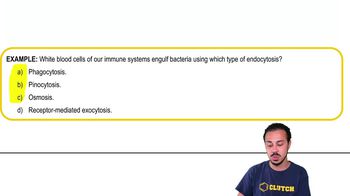
  • A white blood cell engulfing a bacterial cell is an example of which process?
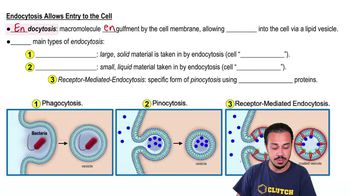
    This is an example of phagocytosis, a type of endocytosis where a cell engulfs large solid materials such as bacteria.
  • What type of molecules are typically transported by endocytosis and exocytosis?
    Large biomolecules such as proteins, carbohydrates, and nucleic acids are transported by endocytosis and exocytosis because they are too big to diffuse through membranes or protein channels.
  • What is the main difference between phagocytosis and pinocytosis?
    Phagocytosis involves the uptake of large solid materials, while pinocytosis involves the uptake of small liquid materials.
  • How does receptor-mediated endocytosis differ from regular pinocytosis?
    Receptor-mediated endocytosis uses specific receptor proteins to selectively bring certain molecules into the cell, making it a specialized form of pinocytosis.
  • What is the role of lipid vesicles in endocytosis?
    Lipid vesicles form around the engulfed material, allowing it to be transported into the cell during endocytosis.
  • Which process allows molecules to exit the cell into the extracellular space?
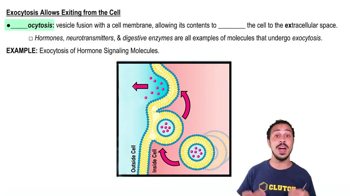
    Exocytosis allows molecules to exit the cell by vesicle fusion with the cell membrane, releasing contents outside.
  • Name three types of molecules commonly released from cells via exocytosis.
    Hormones, neurotransmitters, and digestive enzymes are commonly released from cells via exocytosis.
  • What does the 'EN' in endocytosis help you remember about the process?
    The 'EN' in endocytosis reminds you that it involves engulfment and entry of materials into the cell.
  • What happens to the vesicle during exocytosis?
    During exocytosis, the vesicle fuses with the cell membrane and releases its contents into the extracellular space.
  • Why can't large biomolecules use simple diffusion or protein channels to cross the cell membrane?
    Large biomolecules are too big to pass through the membrane by simple diffusion or protein channels, so they require bulk transport mechanisms like endocytosis and exocytosis.