Fermentation & Anaerobic Respiration quiz #1 Flashcards

Fermentation & Anaerobic Respiration quiz #1
Control buttons has been changed to "navigation" mode.
1/10
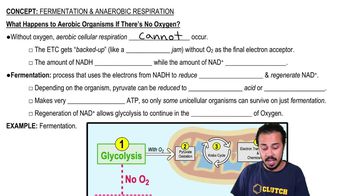
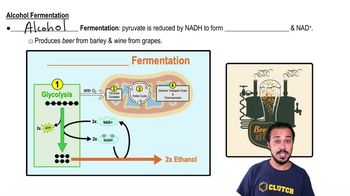
  • What metabolic process allows cells to generate ATP in anaerobic environments?
    Fermentation allows cells to generate ATP in anaerobic environments by regenerating NAD+ from NADH, enabling glycolysis to continue.
  • Which of the following processes will occur in the absence of oxygen: aerobic respiration, fermentation, or the electron transport chain?
    Fermentation will occur in the absence of oxygen, while aerobic respiration and the electron transport chain require oxygen.
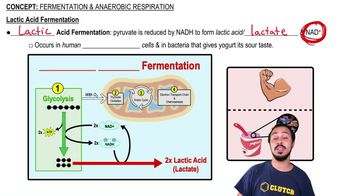
  • Under which conditions would a cell begin lactic acid fermentation?
    A cell would begin lactic acid fermentation when oxygen is unavailable, such as during intense exercise in muscle cells.
  • What is the toxic end product of anaerobic fermentation in human muscle cells?
    The toxic end product of anaerobic fermentation in human muscle cells is lactic acid.
  • Which of the following statements regarding fermentation is correct: Fermentation produces large amounts of ATP, fermentation regenerates NAD+ for glycolysis, or fermentation requires oxygen?
    Fermentation regenerates NAD+ for glycolysis, allowing glycolysis to continue in the absence of oxygen.
  • A strictly fermentative bacterium produces energy by which process?
    A strictly fermentative bacterium produces energy by glycolysis, followed by fermentation to regenerate NAD+.
  • Why does the electron transport chain become backed up in the absence of oxygen?
    Without oxygen as the final electron acceptor, electrons cannot be passed down the chain, causing NADH to accumulate and NAD+ levels to drop dangerously low.
  • What is the role of NAD+ regeneration in fermentation?
    Regenerating NAD+ during fermentation is essential because it allows glycolysis to continue producing ATP even when oxygen is unavailable.
  • What alternative electron acceptors can be used in anaerobic respiration instead of oxygen?
    Anaerobic respiration can use nitrate, sulfate, or carbon dioxide as alternative final electron acceptors in the electron transport chain.
  • How does the amount of ATP produced by anaerobic respiration compare to fermentation and aerobic respiration?
    Anaerobic respiration produces more ATP than fermentation but less than aerobic respiration, which uses oxygen as the final electron acceptor.