Back

Immune Tolerance definitions

Control buttons has been changed to "navigation" mode.
1/15
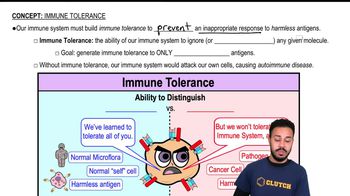
  • Immune Tolerance

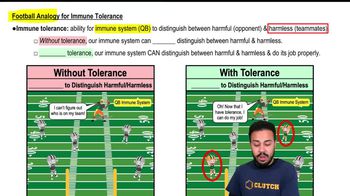
    Ability of the immune system to ignore harmless antigens while targeting harmful ones, preventing attacks on healthy cells.
  • Antigen

    Any molecule recognized by the immune system, which can be classified as harmful or harmless.
  • Autoimmune Disease

    Condition resulting from the immune system attacking the body's own healthy cells due to loss of tolerance.
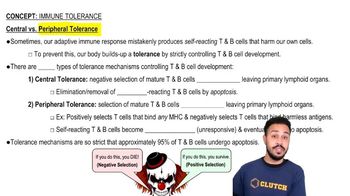
  • Central Immune Tolerance

    Mechanism in primary lymphoid organs eliminating self-reacting T and B cells before they enter circulation.
  • Peripheral Immune Tolerance

    Mechanism in secondary lymphoid organs further eliminating or inactivating self-reacting immune cells.
  • Negative Selection

    Process eliminating immune cells that react to self or harmless antigens, mainly through apoptosis.
  • Positive Selection

    Process promoting survival of immune cells that appropriately recognize MHC molecules.
  • Self-reacting Cell

    Immune cell capable of attacking the body's own healthy tissues, potentially causing harm.
  • Apoptosis

    Programmed cell death used to remove unwanted or potentially harmful immune cells during development.
  • Primary Lymphoid Organ

    Site such as bone marrow or thymus where immune cells develop and undergo initial selection.
  • Secondary Lymphoid Organ

    Site such as lymph nodes where mature immune cells encounter antigens and undergo further selection.
  • Microbiota

    Community of normal, harmless microorganisms living in and on the body, tolerated by the immune system.
  • Anergy

    State of immune cell unresponsiveness, preventing reaction to harmless or self antigens.
  • MHC

    Molecule on cell surfaces presenting antigens to T cells, crucial for immune cell selection.
  • Pathogen

    Harmful microorganism or agent that triggers an immune response and is targeted for elimination.