Back

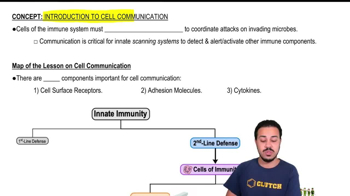
Introduction to Cell Communication definitions

Control buttons has been changed to "navigation" mode.
1/13
  • Cell Communication

    Critical process allowing immune cells to coordinate responses against microbes and host cell damage through specific molecular interactions.
  • Immune System

    Body's defense network utilizing coordinated cellular actions to detect and respond to invading microbes and internal threats.
  • Surface Receptors

    Molecules on cell membranes that detect microbial signals or host cell damage, initiating immune responses.
  • Adhesion Molecules

    Cell surface structures enabling immune cells to bind and interact, facilitating communication and coordinated action.
  • Cytokines

    Signaling proteins released by immune cells to alert, activate, and coordinate other components of the immune response.
  • Scanning Systems

    Immune mechanisms acting as surveillance, detecting microbial presence and signs of cellular distress.
  • Innate Effectors

    Immune components acting as immediate responders, executing actions against detected threats.
  • Pattern Recognition Receptors

    Specialized molecules that identify common microbial features, triggering immune activation.
  • Complement System

    A cascade of proteins enhancing immune responses, often discussed after cell communication mechanisms.
  • Second Line Defenses

    Immune strategies beyond physical barriers, including scanning and effector systems for microbial detection and response.
  • Microbes

    Invading organisms detected and targeted by immune surveillance and response systems.
  • Host Cell Damage

    Cellular distress signals recognized by immune scanning systems, prompting defensive actions.
  • Innate Immunity

    Immediate, non-specific immune defense involving scanning and effector mechanisms.