Introduction to Microbiology quiz #6 Flashcards

Introduction to Microbiology quiz #6
Control buttons has been changed to "navigation" mode.
1/40
  • A barophile would grow best in what conditions?
    A barophile grows best under high pressure conditions.
  • Any abnormal condition or disease caused by a fungus.
    A mycosis is an abnormal condition or disease caused by a fungus.
  • MacConkey agar is both selective and differential.
    True. MacConkey agar is both selective and differential.
  • Who developed the culture plate method to identify pathogens?
    Robert Koch developed the culture plate method.
  • The most frequently used portal of entry for pathogens is the
    The respiratory tract is the most frequently used portal of entry.
  • Of the following, which antibiotic is an inhibitor of protein synthesis?
    Streptomycin is an inhibitor of protein synthesis.
  • Malaria is spread by __________.
    Malaria is spread by mosquitoes.
  • Indirect transmission of a disease ______.
    Indirect transmission occurs via contaminated objects or vectors.
  • Nitrifying bacteria participate in the nitrogen cycle mainly by
    Nitrifying bacteria convert ammonia to nitrites and nitrates.
  • Which of the following can be caused by a bacterial or viral infection?
    Pneumonia can be caused by either bacteria or viruses.
  • Define microbiology terms.
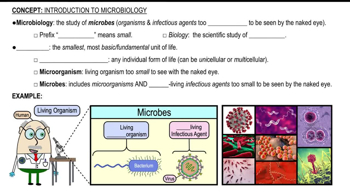
    Microbiology terms include microbe, microorganism, pathogen, and colony.
  • The presence of pus is a sign of ______.
    The presence of pus is a sign of infection.
  • What are transient microbiota?
    Transient microbiota are microbes that temporarily reside on the body.
  • What is a lobate colony?
    A lobate colony has irregular, lobed edges.
  • Order the following steps a microorganism takes in the process of establishing disease.
    Entry, adhesion, invasion, multiplication, and damage to host.
  • The agent that causes an infection and disease is most commonly referred to as the ______ agent.
    It is referred to as the etiologic agent.
  • Most pathogens that gain access through the skin
    Most pathogens enter through breaks or cuts in the skin.
  • Which scientist developed the idea that microorganisms can cause diseases?
    Louis Pasteur developed the idea that microorganisms can cause diseases.
  • Protozoan and helminthic diseases are difficult to treat because
    They are eukaryotic and share similarities with human cells.
  • Cytopathic effects are changes in host cells due to
    Cytopathic effects are due to viral infection.
  • The biosafety level (BSL) for most introductory microbiology laboratories is
    BSL-1 is used for most introductory microbiology labs.
  • The function(s) of neutrophils is to ______.
    Neutrophils function to phagocytize and destroy microbes.
  • What is Maneval's stain used for?
    Maneval's stain is used to visualize bacterial capsules.
  • Who is credited with first observing microorganisms?
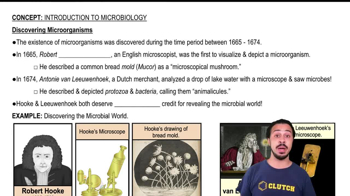
    Antony van Leeuwenhoek is credited with first observing microorganisms.
  • Who identified microorganisms as the cause of infection in people?
    Robert Koch identified microorganisms as the cause of infection.
  • What in our bodies consists of beneficial bacteria and helps us resist pathogens?
    The normal microbiota consists of beneficial bacteria.
  • Which type of acidic fermentation produces mixed acid products?
    Mixed acid fermentation produces mixed acid products.
  • Most sterilization is performed using a agent, such as heat.
    Most sterilization is performed using a physical agent, such as heat.
  • Disinfecting agents naturally produced by microorganisms are called what?
    They are called antibiotics.
  • To retrieve a sample from a culture tube with an inoculating loop, the cap of the tube is
    The cap is removed and held in the hand to prevent contamination.
  • The most common way microorganisms are transmitted to foods is by
    Microorganisms are most commonly transmitted to foods by hands.
  • A culture that contains only one species of microorganism is called a(n) culture.
    It is called a pure culture.
  • What is microbiology chapter 1 about?
    Chapter 1 introduces the study of microbes and their importance.
  • Fungi release digestive enzymes into their _____.
    Fungi release digestive enzymes into their environment.
  • What is the casease test used for?
    The casease test detects the ability of bacteria to hydrolyze casein.
  • Are bacteria, viruses, and fungi examples of microbes?
    Yes, bacteria, viruses, and fungi are all examples of microbes.
  • What are microbiology flash cards used for?
    Microbiology flash cards are used for studying key concepts and terms.
  • Helminthic diseases are usually transmitted to humans by
    Helminthic diseases are usually transmitted by ingestion of contaminated food or water.
  • Which of the following is a fomite?
    A doorknob is an example of a fomite.
  • A cold transmitted by a facial tissue is an example of
    It is an example of indirect contact transmission.