Back

Major Histocompatibility Complex Molecules definitions

Control buttons has been changed to "navigation" mode.
1/15
  • Major Histocompatibility Complex

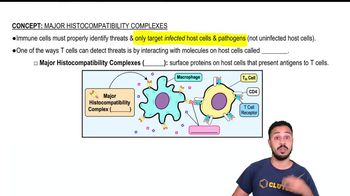
    Surface protein on host cells that displays antigens to T cells, enabling immune recognition and response.
  • MHC Class I

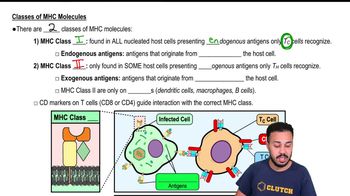
    Molecule present on all nucleated host cells, presenting endogenous antigens to cytotoxic T cells.
  • MHC Class II

    Molecule found only on antigen presenting cells, displaying exogenous antigens to helper T cells.
  • Antigen

    Molecule or fragment recognized as foreign by the immune system, triggering a response.
  • Endogenous Antigen

    Molecule originating from inside a host cell, such as viral proteins, presented by MHC Class I.
  • Exogenous Antigen

    Molecule originating from outside a host cell, internalized and presented by MHC Class II.
  • Cytotoxic T Cell

    Immune cell with CD8 marker that recognizes antigens on MHC Class I and targets infected cells.
  • Helper T Cell

    Immune cell with CD4 marker that recognizes antigens on MHC Class II and coordinates immune responses.
  • Antigen Presenting Cell

    Cell type, such as dendritic cell, macrophage, or B cell, that displays antigens via MHC Class II.
  • CD4 Marker

    Surface protein on helper T cells guiding interaction with MHC Class II molecules.
  • CD8 Marker

    Surface protein on cytotoxic T cells guiding interaction with MHC Class I molecules.
  • T Cell Receptor

    Molecule on T cells that detects antigens presented by MHC molecules, initiating immune responses.
  • Nucleated Host Cell

    Any cell containing a nucleus, capable of expressing MHC Class I molecules.
  • Macrophage

    Type of antigen presenting cell that engulfs pathogens and displays antigens via MHC Class II.
  • Dendritic Cell

    Potent antigen presenting cell specializing in capturing and presenting antigens to T cells.