Mitochondria & Chloroplasts quiz #1 Flashcards

Mitochondria & Chloroplasts quiz #1
Control buttons has been changed to "navigation" mode.
1/10
  • What is the site for ATP synthesis in bacterial cells?
    In bacterial cells, ATP synthesis occurs at the cell (plasma) membrane, since bacteria lack mitochondria.
  • What process do mitochondria use to generate ATP for the cell?
    Mitochondria use cellular respiration to break down food sources like sugars and lipids to generate ATP.
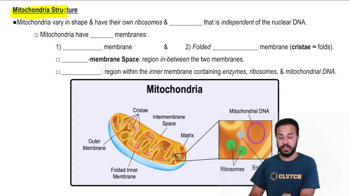
  • What are the two membranes of the mitochondria called?
    The two membranes are called the outer membrane and the folded inner membrane.
  • What is the name of the folds found in the inner mitochondrial membrane?
    The folds in the inner mitochondrial membrane are called cristae.
  • What does the mitochondrial matrix contain?
    The mitochondrial matrix contains enzymes, ribosomes, and mitochondrial DNA.
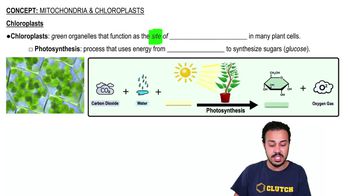
  • What is the main function of chloroplasts in plant cells?
    Chloroplasts are responsible for photosynthesis, converting sunlight, carbon dioxide, and water into glucose and oxygen.
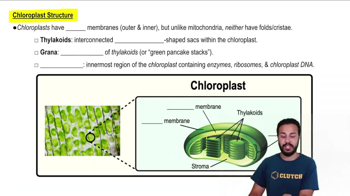
  • What are thylakoids and where are they found?
    Thylakoids are interconnected, pancake-shaped sacs found inside chloroplasts.
  • What is the stroma in a chloroplast?
    The stroma is the innermost region of the chloroplast, containing enzymes, ribosomes, and chloroplast DNA.
  • What is the difference between the membranes of mitochondria and chloroplasts?
    Mitochondria have a folded inner membrane with cristae, while chloroplast membranes do not have folds or cristae.
  • What are grana in chloroplasts?
    Grana are stacks of thylakoids found within the chloroplast.