Back

Pentose-Phosphate Pathway definitions

Control buttons has been changed to "navigation" mode.
1/13
  • Pentose Phosphate Pathway

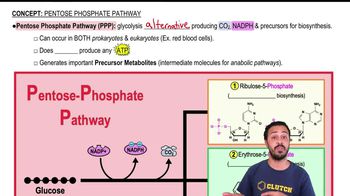
    A glycolysis alternative that generates NADPH, carbon dioxide, and biosynthetic precursors without producing ATP.
  • NADPH

    An electron carrier essential for biosynthetic reactions, supplying reducing power for building cell molecules and structures.
  • Carbon Dioxide

    A byproduct released during the conversion of glucose in the pentose phosphate pathway.
  • Precursor Metabolites

    Intermediate molecules produced that serve as building blocks for anabolic pathways and biosynthesis.
  • Ribulose 5-Phosphate

    A molecule required for nucleotide biosynthesis, linking the pathway to DNA and RNA formation.
  • Nucleotide Biosynthesis

    The process of creating nucleotides, which are essential for constructing nucleic acids like DNA and RNA.
  • Erythrose 5-Phosphate

    A precursor necessary for synthesizing aromatic amino acids such as Tyrosine and Tryptophan.
  • Aromatic Amino Acids

    A group of amino acids, including Tyrosine and Tryptophan, synthesized using erythrose 5-phosphate.
  • Glyceraldehyde 3-Phosphate

    A glycolysis intermediate produced that connects the pentose phosphate pathway back to glycolysis.
  • Glycolysis

    A metabolic pathway that breaks down glucose to produce energy, with which the pentose phosphate pathway interacts.
  • Anabolic Pathways

    Cellular processes that build complex molecules from simpler ones, relying on products from the pentose phosphate pathway.
  • Red Blood Cells

    Cell type in which the pentose phosphate pathway operates, highlighting its importance in both prokaryotes and eukaryotes.
  • Cellular Respiration

    A series of metabolic processes for energy production, interconnected with the pentose phosphate pathway via G3P.