Skip to main content
Microbiology
My Course
Learn
Exam Prep
AI Tutor
Study Guides
Textbook Solutions
Flashcards
Explore
Try the app
My Course
Learn
Exam Prep
AI Tutor
Study Guides
Textbook Solutions
Flashcards
Explore
Try the app
Back
Type I Hypersensitivities definitions
You can tap to flip the card.
Type I Hypersensitivity
You can tap to flip the card.
👆
Type I Hypersensitivity
A rapid immune overreaction to external antigens, mediated exclusively by IgE antibodies, often resulting in allergy symptoms within 30 minutes.
Track progress
Control buttons has been changed to "navigation" mode.
1/15
Related flashcards
Related practice
Recommended videos
Type I Hypersensitivities quiz
Type I Hypersensitivities
15 Terms
Type I Hypersensitivities
27. Immunological Disorders
4 problems
Topic
Type II Hypersensitivities
27. Immunological Disorders
4 problems
Topic
27. Immunological Disorders - Part 1 of 2
4 topics
11 problems
Chapter
27. Immunological Disorders - Part 2 of 2
4 topics
6 problems
Chapter
04:31
Diagnosing & Treating Allergies
205
views
3
rank
02:23
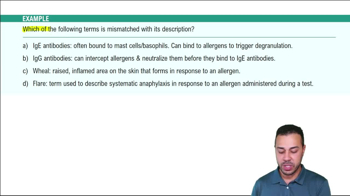
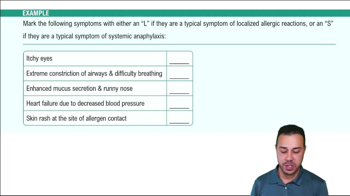
Type I Hypersensitivities Example 3
160
views
3
rank
01:52
Type I Hypersensitivities Example 2
171
views
3
rank
Terms in this set (15)
Hide definitions
Type I Hypersensitivity
A rapid immune overreaction to external antigens, mediated exclusively by IgE antibodies, often resulting in allergy symptoms within 30 minutes.
IgE Antibody
An immunoglobulin specialized in defending against parasites and venoms, but central to triggering allergic reactions in modern environments.
Allergen
An external antigen, often harmless, that provokes immune sensitization and subsequent allergic responses upon re-exposure.
Mast Cell
A tissue-resident immune cell that, when coated with IgE, releases inflammatory mediators like histamine during allergic reactions.
Basophil
A circulating white blood cell that, upon IgE binding, releases granules containing substances that drive allergic symptoms.
Degranulation
The process where mast cells or basophils release stored inflammatory chemicals, such as histamine, into surrounding tissues.
Histamine
A potent mediator released during allergic reactions, responsible for symptoms like itching, swelling, and increased mucus production.
Localized Allergic Reaction
A mild immune response confined to the site of allergen exposure, causing symptoms like rash, sneezing, or itchy eyes.
Systemic Anaphylaxis
A severe, body-wide allergic reaction that can cause life-threatening drops in blood pressure and airway obstruction.
Anaphylactic Shock
A critical condition marked by dangerously low blood pressure and organ failure due to widespread mediator release.
Prick Puncture Skin Test
A diagnostic method where allergens are introduced under the skin to observe rapid wheal and flare reactions indicating sensitivity.
Immunotherapy
A treatment involving gradual allergen exposure to retrain the immune system, aiming to reduce allergic response severity.
Desensitization
A process of repeated, controlled allergen exposure intended to shift antibody production and lessen allergic reactions.
IgG Antibody
A common immunoglobulin that, when produced during immunotherapy, can intercept allergens before they trigger IgE-mediated responses.
Hygiene Hypothesis
A theory suggesting that reduced early-life exposure to microbes may increase susceptibility to allergic diseases.
 BackBack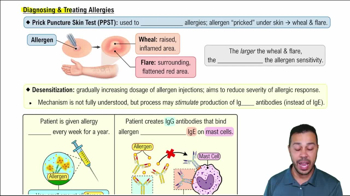
 04:31
04:31