Back

Urinary Tract Infections (UTIs) definitions

Control buttons has been changed to "navigation" mode.
1/15
  • Escherichia coli

    A gut-dwelling bacterium responsible for the vast majority of urinary tract infections due to its ability to colonize the urinary tract.
  • Cystitis

    Inflammation of the bladder, typically presenting with pain or difficulty urinating and frequent urges to urinate.
  • Pyelonephritis

    A severe kidney infection marked by high fever, flank pain, and risk of kidney damage or bacteremia.
  • Urethritis

    Inflammation localized to the urethra, often causing discomfort or pain during urination.
  • Ureteritis

    Infection involving the ureters, which can occur as bacteria ascend from the bladder toward the kidneys.
  • Catheter-associated Urinary Tract Infection

    An infection resulting from the insertion of a tube into the bladder, significantly increasing infection risk.
  • Dysuria

    A symptom characterized by pain or difficulty during urination, commonly seen in lower urinary tract infections.
  • Nitrites

    Chemical indicators in urine produced when bacteria convert nitrates, signaling possible bacterial infection.
  • Leukocyte esterase

    An enzyme detected in urine that signals the presence of white blood cells, suggesting infection.
  • Colony-forming units

    A quantitative measure of viable bacteria in urine, with high counts indicating infection.
  • Nitrofurantoin

    An antibiotic specifically used to treat urinary tract infections due to its targeted action in the urinary system.
  • Sulfa drugs

    A class of antibiotics, including trimethoprim and sulfamethoxazole, commonly prescribed for urinary tract infections.
  • Bacteremia

    A serious complication where bacteria enter the bloodstream, often originating from severe kidney infections.
  • Female anatomy

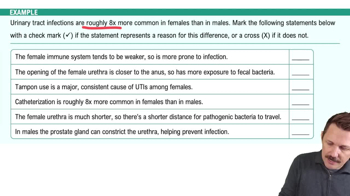
    A risk factor for urinary tract infections due to a shorter urethra and proximity to the anus, facilitating bacterial entry.
  • Candida albicans

    A fungal organism that can rarely cause urinary tract infections, especially in immunocompromised or diabetic individuals.