 Back
BackAntimicrobial Treatment and Resistance in Microbiology
 05:33
05:33
Terms in this set (20)
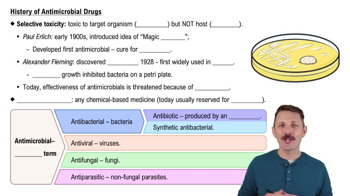
Destroy the infective agent without harming the host's cells.
Toxic to microbes, nontoxic to host, microbicidal, soluble, potent, resistant to premature breakdown, does not induce resistance, complements host defenses, and does not disrupt host health.
Bacteria: Streptomyces, Bacillus; Molds: Penicillium, Cephalosporium.
Measures zones of inhibition around antibiotic discs on agar to assess bacterial susceptibility.
Area around antibiotic disc where bacterial growth is prevented; larger zones indicate greater sensitivity.
Determines the Minimum Inhibitory Concentration (MIC), the lowest drug concentration that visibly inhibits bacterial growth.
Cell wall synthesis, protein synthesis, nucleic acid synthesis, cytoplasmic membrane, and folic acid synthesis.
Beta-lactam ring fused to a thiazolidine ring; beta-lactam ring is essential for activity.
Microbial enzymes like penicillinase destroy the drug, rendering it inactive.
Modification of drug binding sites prevents drug action, e.g., modified ribosome prevents macrolide binding.
Active transport pumps expel drugs from the microbial cell, reducing drug concentration inside.
Changes in membrane porins block drug entry into the microbe.
Microbes bypass blocked pathways, e.g., sulfonamide resistance by using different folic acid synthesis routes.
Drug-resistant bacteria survive treatment, proliferate, and transfer resistance genes; misuse accelerates this process.
TI = \(\frac{Toxic\ Dose}{Therapeutic\ Dose}\); higher TI means safer drug.
TI > 10 indicates safer drugs; TI close to 1 indicates higher risk of toxicity.
Can affect liver, kidneys, GI tract, cardiovascular system, nervous system, skin, bones, and teeth.
Drugs may act as antigens; penicillin allergies are most common and can cause severe reactions upon re-exposure.
Broad-spectrum antibiotics disrupt normal microbiota, allowing opportunistic pathogens to overgrow.
To guide drug choice and dosage by determining bacterial sensitivity to antibiotics.