 Back
Chemotherapeutic Agents in Microbiology
 05:33

Terms in this set (21)
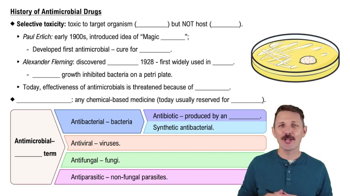
Chemotherapy is the use of drugs to treat a disease by interfering with the growth of microbes within a host.
An antibiotic is a substance produced by a microbe, usually a fungus or bacterium, that in small amounts inhibits another microbe.
Selective toxicity means killing harmful microbes without damaging the host cells.
1. Inhibition of cell wall synthesis
2. Inhibition of protein synthesis
3. Inhibition of nucleic acid replication and transcription
4. Injury to plasma membrane
5. Inhibition of essential metabolite synthesis
Penicillins prevent the synthesis of peptidoglycan by inhibiting cross-linking in the bacterial cell wall, especially in gram-positive bacteria.
Natural drugs are produced by microbes; semisynthetic drugs are chemically modified natural drugs; synthetic drugs are man-made compounds.
The therapeutic index is the ratio of the toxic dose to the therapeutic dose of a drug; a higher index indicates safer drugs.
Bactericidal drugs kill microbes directly, while bacteriostatic drugs prevent microbes from growing.
Chloramphenicol, erythromycin, streptomycin, and tetracyclines target bacterial 70S ribosomes to inhibit protein synthesis.
Sulfonamides competitively inhibit the enzyme that converts para-aminobenzoic acid (PABA) to dihydrofolic acid, blocking folic acid synthesis.
A superinfection is an overgrowth of normal microbiota resistant to antibiotics, such as Candida albicans or Clostridioides difficile.
It tests the effectiveness of chemotherapeutic agents by measuring the zone of inhibition around antibiotic disks on an inoculated agar plate.
Enzymatic drug destruction, prevention of drug penetration, alteration of drug target sites, and rapid efflux of the antibiotic.
Penicillins like methicillin and oxacillin that contain chemically added side chains making them resistant to penicillinase enzymes.
Polymyxins disrupt bacterial plasma membrane permeability, effective mainly against gram-negative bacteria.
Rifamycin inhibits mRNA synthesis by blocking RNA polymerase, used especially for antitubercular activity.
They affect a wide range of gram-positive and gram-negative bacteria, useful when the causative agent is unknown.
Aminoglycosides change the shape of the 30S ribosomal subunit, causing misreading of mRNA and inhibiting protein synthesis.
Clavulanic acid is a noncompetitive inhibitor of penicillinase, protecting penicillins from enzymatic degradation.
Polyenes (e.g., nystatin, amphotericin B), azoles (imidazoles and triazoles), and allylamines disrupt ergosterol synthesis in fungal membranes.
Finish prescriptions, avoid leftover antibiotics, use narrow-spectrum drugs, and avoid unnecessary prescriptions.