 Back
DNA Replication Basics in Microbiology
 05:10

Terms in this set (11)
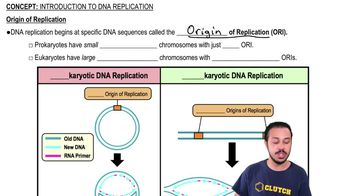
DNA replication is the process by which DNA makes a copy of itself.
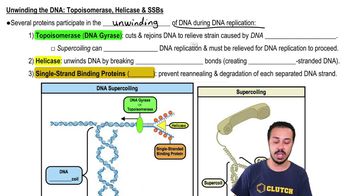
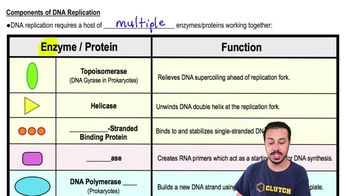
Helicase unzips the DNA double helix by breaking hydrogen bonds between bases.
Primase synthesizes RNA primers that serve as starting points for DNA synthesis.
An RNA primer is a short RNA sequence that provides a starting point for DNA polymerase to begin DNA synthesis.
DNA polymerase builds new DNA strands by adding nucleotides complementary to the template strand.
DNA is synthesized in the 5′ to 3′ direction.
The leading strand is synthesized continuously in the 5′ to 3′ direction.
The lagging strand is synthesized discontinuously in short segments called Okazaki fragments.
Okazaki fragments are short DNA pieces synthesized on the lagging strand.
DNA ligase joins Okazaki fragments by forming phosphodiester bonds to create a continuous strand.
Semiconservative replication means each new DNA molecule contains one old (template) strand and one newly synthesized strand.