 Back
Microbial Genetics - Microbiology
 05:45

Terms in this set (25)
Genetics is the study of genes, how they carry information, how information is expressed, and how genes are replicated.
Genome is all the genetic information in a cell. Chromosomes are structures containing DNA that physically carry hereditary information.
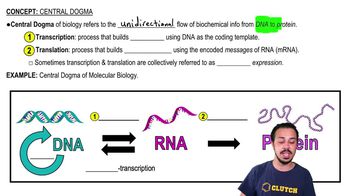
DNA is transcribed to messenger RNA (mRNA), which is then translated into protein, representing gene expression.
Bacteria usually have a single circular chromosome made of DNA and associated proteins, often supercoiled.
DNA polymerase synthesizes DNA by adding nucleotides to the growing strand and proofreads for errors.
The leading strand is synthesized continuously in the 5' to 3' direction; the lagging strand is synthesized discontinuously creating Okazaki fragments.
Helicase unwinds the double-stranded DNA to separate the two strands for replication.
mRNA carries genetic code, tRNA transports amino acids, and rRNA is part of ribosomes.
RNA polymerase binds to the promoter, synthesizes mRNA from the DNA template strand in the 5' to 3' direction, and stops at the terminator sequence.
An operon is a group of genes regulated together, including a promoter, operator, and structural genes.
In an inducible operon, genes are off when a repressor binds the operator; an inducer inactivates the repressor, allowing transcription.
The lac operon controls lactose metabolism; it is induced by allolactose which inactivates the repressor, enabling gene expression.
A repressible operon is usually on; a corepressor activates the repressor to bind the operator and stop transcription.
The trp operon is repressible; excess tryptophan acts as a corepressor to activate the repressor and inhibit tryptophan synthesis.
Catabolite repression inhibits use of alternative carbon sources when glucose is present, mediated by cAMP and CAP binding to the promoter.
A mutation is a permanent change in the DNA base sequence that may affect protein function.
Types include silent (neutral), missense (amino acid change), nonsense (stop codon), and frameshift (insertion/deletion shifting reading frame).
Mutagens increase mutation rates 10 to 1000 times by causing DNA damage or base changes.
The Ames test detects mutagenic potential of substances by measuring mutation reversion rates in bacteria.
Vertical gene transfer is gene transfer from parent to offspring; horizontal gene transfer is gene transfer between cells of the same generation.
Plasmids are self-replicating circular DNA that may carry genes for antibiotic resistance, toxin production, or conjugation.
Transposons are DNA segments that can move within or between DNA molecules, sometimes carrying antibiotic resistance genes.
Transformation is uptake of naked DNA from the environment by bacteria, leading to genetic recombination.
Conjugation is transfer of plasmids between bacteria via direct cell-to-cell contact, often mediated by sex pili.
Transduction is gene transfer via bacteriophages, either generalized (random DNA) or specialized (specific genes).