 Back
BackMicrobiology Exam 1 Study Guide
 03:36
03:36

Terms in this set (29)
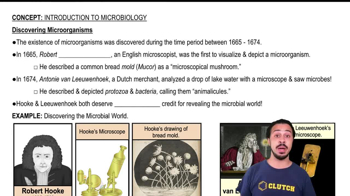
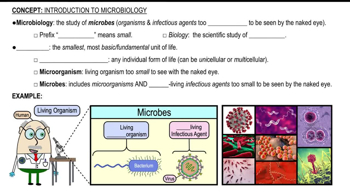
Microbiology
It is the study of microorganisms and their relevance to human health, the environment, and industry.
Bacteria, Archaea, Fungi, Protozoa, Algae, and Viruses.
Cellular life consists of cells (bacteria, archaea, fungi, protozoa, algae), while acellular life includes viruses, viroids, and prions which lack cellular structure.
Viruses lack cellular structure and cannot reproduce or carry out metabolism without a host cell, making them obligate intracellular parasites.
Spontaneous generation is the disproven idea that life arises from nonliving matter; biogenesis states that life arises from existing life.
Pasteur's experiment refuted spontaneous generation by showing that sterilized broth remained free of microbes unless exposed to contaminated air.
Koch developed postulates to link specific microbes to specific diseases, advancing germ theory.
Organisms are named using binomial nomenclature (Genus species) and classified based on shared characteristics.
To simulate early Earth conditions and show organic molecules like amino acids could form from inorganic compounds.
A chemical reaction that joins monomers into polymers by removing water molecules.
Carbohydrates, Lipids, Proteins, and Nucleic acids.
Functional groups determine the chemical properties and reactivity of organic molecules.
All living things are made of cells, cells are the basic unit of life, and all cells come from preexisting cells.
Prokaryotes lack a nucleus and membrane-bound organelles; eukaryotes have both.
Explains the origin of eukaryotic cells from prokaryotic ancestors through symbiosis.
Gram-positive have thick peptidoglycan layers; Gram-negative have thin layers plus an outer membrane.
Prokaryotes that thrive in extreme environments like high temperature, acidity, or salinity.
Phototrophs obtain energy from light; chemotrophs obtain energy from chemical compounds.
Autotrophs fix carbon dioxide to make organic compounds; heterotrophs consume organic compounds.
Normal microbiota are harmless or beneficial microbes living on/in the body; pathogens cause disease.
Protists, fungi, and helminths (e.g., platyhelminths).
Flagella, cilia, and pseudopodia enable movement.
Yeasts are unicellular fungi; molds are multicellular and produce toxins.
Capsid, genome (DNA or RNA), and sometimes an envelope.
Lytic cycle destroys host cells by producing new virions; lysogenic cycle integrates viral DNA into host genome.
They require host cellular machinery to replicate and cannot reproduce independently.
Contain RNA genome and use reverse transcriptase to make DNA from RNA (e.g., HIV).
Hemagglutination, PCR, and ELISA (EIA) are common viral detection methods.
Viroids are infectious ssRNA molecules; prions are misfolded infectious proteins.