 Back
Microbiology Exam 2 Review Flashcards
 02:16

Terms in this set (30)
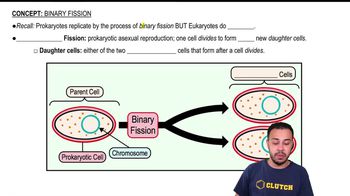
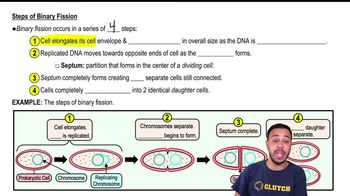
Binary fission is the process by which a bacterial cell divides into two cells.
Generation time in bacteria.
the amount of time it takes for a population of cells to double.
Cells are metabolically active, making enzymes, ATP, and components, but not dividing yet.
Cells divide at their fastest rate, are similar, and most sensitive to antibiotics.
Cell division rate equals cell death rate; population levels off due to nutrient depletion and waste buildup.
More cells die than are produced, causing a decline in the population.
Phototrophs get energy from sunlight.
Chemotrophs obtain energy by oxidizing chemical compounds.
Autotrophs use CO₂ as their carbon source.
Heterotrophs get carbon from organic compounds.
Lithotrophs get electrons from inorganic molecules; organotrophs get electrons from organic molecules.
An obligate aerobe requires oxygen to grow and cannot grow without it.
An obligate anaerobe cannot tolerate oxygen; oxygen can kill it.
A facultative anaerobe can grow with or without oxygen but grows better with oxygen.
It does not use oxygen but can tolerate its presence.
A microaerophile needs oxygen but only at low concentrations.
Psychrophiles grow at low temps (near refrigeration), mesophiles prefer moderate temps (25–40 °C), thermophiles prefer high temps (45–60 °C or higher).
Neutrophiles prefer neutral pH, acidophiles prefer acidic, and alkalinophiles prefer basic conditions.
Water moves into the cell, causing it to swell and possibly lyse if the cell wall is compromised.
Water leaves the cell, causing it to shrink or undergo plasmolysis.
Obligate halophiles require high salt concentrations; facultative halophiles tolerate salt but do not require it.
A medium that inhibits unwanted organisms while allowing the target organisms to grow.
A medium that allows visualization of differences between organisms, such as hemolysis patterns on blood agar.
Microbes detect population density changes and respond using signaling molecules that diffuse through the environment.
Fimbriae are for attachment; sex pili transfer genes between bacterial cells during conjugation.
Alternating NAG and NAM molecules cross-linked by short peptide chains forming the bacterial cell wall.
Gram-positive have thick peptidoglycan with teichoic acids; Gram-negative have thin peptidoglycan and an outer membrane with LPS.
The region containing the bacterial chromosome; it is not a storage site.
A coccobacillus is a short rod-shaped bacterium with features between a coccus and a bacillus.
The mitochondrion contains cristae and enzymes for aerobic respiration.