 Back
BackMicrobiology Exam 3 Study Guide Flashcards
 05:33
05:33
Terms in this set (28)
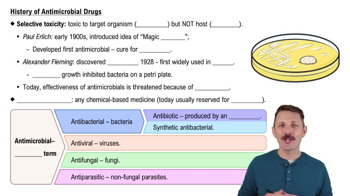
Selective toxicity is the ability of a drug to target microbial cells without damaging host cells.
Therapeutic index measures the safety of a drug; it is the ratio of the toxic dose to the therapeutic dose.
Bactericidal drugs kill bacteria, while bacteriostatic drugs inhibit bacterial growth.
Broad-spectrum drugs target a wide range of bacteria; narrow-spectrum drugs target specific types.
Beta-lactam antibiotics inhibit bacterial cell wall synthesis by targeting peptidoglycan cross-linking.
Drugs can inhibit protein synthesis by targeting the 30S or 50S ribosomal subunits in bacteria.
Some antimicrobials block bacterial DNA replication or RNA transcription to stop growth.
Certain drugs inhibit bacterial metabolic pathways like folic acid synthesis, essential for DNA and RNA production.
Resistance mechanisms include drug inactivation, target modification, decreased permeability, and efflux pumps.
Resistance genes spread via horizontal gene transfer and plasmids among bacteria.
Pathogenicity is the ability to cause disease; virulence is the degree of pathogenicity.
Infection steps: exposure, adhesion, invasion, colonization, and disease.
Microbes use fimbriae, pili, and glycocalyx to adhere to host cells.
Biofilms help microbes colonize surfaces and resist antimicrobial treatments.
Exotoxins are secreted proteins; endotoxins are lipopolysaccharides from Gram-negative bacteria cell walls.
Pathogens evade immunity using capsules, antigenic variation, and intracellular survival.
Epidemiology is the study of disease distribution and determinants in populations.
Diseases spread via contact, vehicle, and vector transmission.
Physical barriers include skin, epithelial junctions, and mucous membranes.
The complement system enhances immune responses and forms the membrane attack complex (MAC) to lyse pathogens.
Phagocytosis involves recognition, engulfment, digestion, and elimination of pathogens.
Adaptive immunity has specificity, memory, and distinguishes between primary and secondary responses.
Humoral immunity is mediated by B cells and antibodies; cellular immunity is mediated by T cells.
Major antibody classes: IgG, IgM, IgA, IgD, and IgE.
Antibodies neutralize pathogens, opsonize for phagocytosis, agglutinate microbes, and mediate ADCC.
MHC I presents antigens to cytotoxic T cells; MHC II presents to helper T cells.
Active immunity involves host antibody production; passive immunity is transfer of antibodies from another source.
Natural immunity occurs via infection or maternal transfer; artificial immunity is induced by vaccines or antibody therapy.