 Back
BackMicrobiology Exam Review Flashcards
 02:45
02:45
Terms in this set (30)
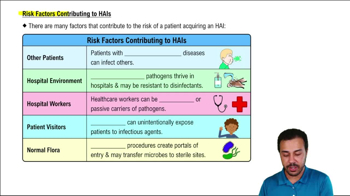
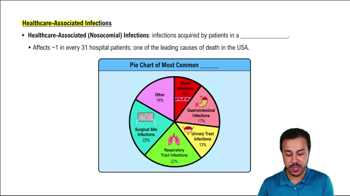
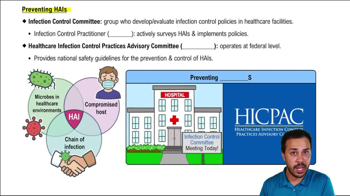
Nosocomial infections, or healthcare-associated infections (HAI), are infections acquired in a hospital or healthcare setting that were not present or incubating at admission.
Infectious Dose (ID) is the minimum number of microbes required to cause infection in a host.
The respiratory tract is the most common portal of entry for pathogens.
Infection is the invasion and multiplication of microorganisms in body tissues causing disease.
Superinfection is a secondary infection caused by an opportunistic pathogen after or during treatment of a primary infection.
Therapeutic index is the ratio of a drug's toxic dose to its effective dose, indicating drug safety.
Universal precautions are infection control practices to prevent transmission of bloodborne pathogens by treating all blood and bodily fluids as infectious.
A microbicide is an agent that kills microbes.
Microbistatic agents inhibit the growth or reproduction of microbes without killing them.
Signs are objective evidence of disease observed by others, such as fever or rash.
Symptoms are subjective feelings of disease reported by the patient, like pain or fatigue.
Stages include incubation, prodromal, illness, decline, and convalescence.
Stages are lag, log (exponential), stationary, and death phases.
Microbiota refers to the community of microorganisms living in or on the human body.
Disease is a condition where normal body functions are impaired due to infection or other causes.
Vertical transmission is the passing of infection from mother to offspring during pregnancy, birth, or breastfeeding.
Horizontal transmission is the spread of infection between individuals of the same generation by direct or indirect contact.
Innate immunity is the body's nonspecific first line of defense against pathogens.
Endogenous infection arises from the host's own microbiota when they enter sterile areas or overgrow.
Exogenous infection is caused by pathogens entering the body from the external environment.
Zoonotic infections are diseases transmitted from animals to humans.
Prevalence is the total number of cases at a given time; incidence is the number of new cases over a period.
Broad spectrum drugs are antibiotics effective against a wide range of bacteria.
Narrow spectrum drugs target specific types of bacteria.
Pasteurization is a process of heating liquids to reduce microbial load without sterilization.
Chemotherapy is the use of chemical agents to treat infectious diseases.
Macrolides are antibiotics that inhibit bacterial protein synthesis by binding to the 50S ribosomal subunit.
Aminoglycosides are antibiotics that disrupt bacterial protein synthesis and are effective against aerobic gram-negative bacteria.
Oligodynamic action is the ability of small amounts of certain metals to exert antimicrobial effects.
Sterilization is the complete destruction or removal of all forms of microbial life.