 Back
BackMicrobiology Key Figures and Microorganism Characteristics
 03:36
03:36

Terms in this set (19)
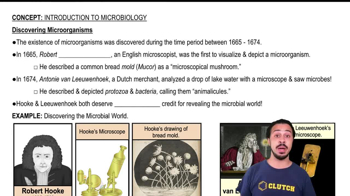
Antony Van Leeuwenhoek is known as the father of microbiology for creating powerful microscopes and first observing microorganisms.
Robert Hooke coined the term "cell" after observing cork under a microscope.
Edward Jenner developed the first smallpox vaccine, pioneering immunology.
Ignaz Semmelweis discovered that handwashing drastically reduced puerperal fever in hospitals.
Joseph Lister introduced antiseptic surgical techniques to reduce infections.
Spallanzani showed that boiling broth prevented microbial growth, supporting spontaneous generation refutation.
Florence Nightingale improved hygiene and sanitation in hospitals, reducing infections.
Protists are mostly unicellular eukaryotes with diverse modes of nutrition and movement.
Protists move using cilia, flagella, or pseudopodia depending on the species.
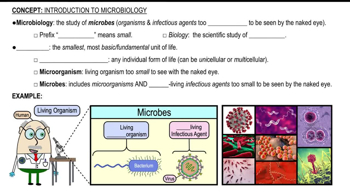
Viruses are acellular, require a host to replicate, and contain either DNA or RNA.
Viruses reproduce by injecting genetic material into host cells and hijacking their machinery.
Bacteria are unicellular prokaryotes with cell walls, reproduce by binary fission, and have diverse metabolisms.
The three layers are the plasma membrane, cell wall, and capsule or outer membrane.
The plasma membrane controls substance entry and exit and is involved in energy production.
The cell wall provides shape and protection; it contains peptidoglycan in most bacteria.
The capsule or outer membrane protects against desiccation and immune responses.
Prions are infectious proteins that cause neurodegenerative diseases without nucleic acids.
Amoebas move and feed using pseudopodia, which are temporary cytoplasmic projections.
Amoebas reproduce mainly by binary fission, a form of asexual reproduction.