 Back
BackMicrobiology: Prokaryotes and Bacterial Characteristics
 02:16
02:16
Terms in this set (15)
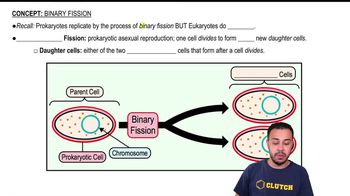
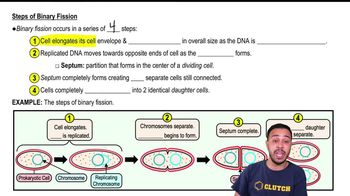
Binary fission is the primary method, where one cell divides into two identical cells. Other methods include budding and spore formation.
Arrangements result from the pattern of cell division and whether daughter cells remain attached, forming clusters like chains, pairs, or grape-like clusters.
It is a comprehensive reference used to classify and identify bacteria based on genetic, biochemical, and morphological characteristics.
Microbes often lack distinct morphological features and have horizontal gene transfer, making classification by traditional methods challenging.
Archaea have unique membrane lipids, lack peptidoglycan in cell walls, and share some genetic similarities with eukaryotes, differing from bacteria.
Extremophiles include thermophiles (heat), halophiles (salt), and acidophiles (acidic environments), adapted to survive extreme conditions.
Without cell walls, mycoplasmas are resistant to antibiotics targeting cell wall synthesis and have flexible shapes.
Low G + C bacteria have fewer guanine and cytosine bases, often with faster growth, while high G + C bacteria have more stable DNA and diverse metabolic capabilities.
They convert atmospheric nitrogen into usable forms, enhancing soil fertility and supporting sustainable agriculture and biofuel production.
Nitrification converts ammonia to nitrate, making nitrogen available to plants and maintaining ecosystem nitrogen balance.
Agrobacterium transfers DNA into plant cells, enabling genetic engineering of adult plants for traits like pest resistance.
Chlamydias are obligate intracellular parasites, while spirochetes are spiral-shaped bacteria with unique motility mechanisms.
Bacteroids are nitrogen-fixing forms of rhizobia inside legume root nodules, crucial for plant nitrogen supply.
Temperature affects enzyme activity and membrane fluidity, determining bacterial growth rates and survival ranges.
UV light damages bacterial DNA, inhibiting replication and can be used to slow or eliminate bacterial growth.