What does an indifference curve represent in consumer theory?
An indifference curve shows all combinations of two goods that provide the same level of satisfaction or utility to a consumer.
How is utility defined in the context of indifference curves?
Utility is the satisfaction or happiness a person receives from consuming goods.
What is marginal utility?
Marginal utility is the additional satisfaction gained from consuming one more unit of a good.
What economic law does utility follow as more of a good is consumed?
Utility follows the law of diminishing returns, meaning each additional unit consumed provides less additional satisfaction.
Why are higher indifference curves preferred to lower ones?
Higher indifference curves represent higher levels of utility, so consumers prefer them because they indicate more satisfaction.
What does it mean when an indifference curve is downward sloping?
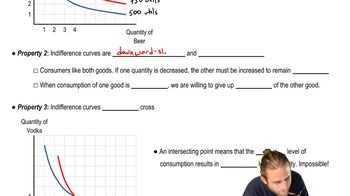
A downward sloping indifference curve means that as you consume less of one good, you must consume more of the other to maintain the same utility.
Why do indifference curves bow inward?
Indifference curves bow inward because when the quantity of one good is low, consumers are willing to give up more of the other good to get more of the scarce good.
Can indifference curves ever cross? Why or why not?
Indifference curves can never cross because that would imply the same bundle provides two different levels of utility, which is impossible.
What is an indifference curve map?
An indifference curve map is a collection of indifference curves showing different levels of utility for a consumer.
What does the marginal rate of substitution (MRS) measure?
The marginal rate of substitution measures the amount of one good a consumer is willing to give up to obtain one more unit of another good while keeping utility constant.
How is the marginal rate of substitution related to the indifference curve?
The marginal rate of substitution is the slope of the indifference curve at any given point.
Does the marginal rate of substitution remain constant along an indifference curve?
No, the marginal rate of substitution changes along the curve because the willingness to substitute one good for another depends on the quantities consumed.
What happens to marginal utility as more of a good is consumed?
Marginal utility decreases as more of a good is consumed, illustrating the law of diminishing marginal utility.
Why do we use the absolute value when calculating the marginal rate of substitution?
We use the absolute value because we are interested in the number of units traded, not the direction, so MRS is always expressed as a positive number.
What does it mean for a consumer to be 'indifferent' between two bundles?
A consumer is indifferent between two bundles if both provide the same level of satisfaction or utility.
 Back
Back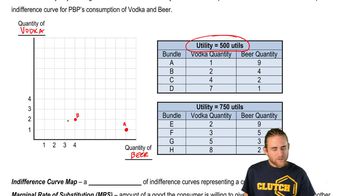
 14:47
14:47