How many calories are provided by one gram of alcohol?
One gram of alcohol provides 7 calories.
What is the caloric value of alcohol per gram?
Alcohol provides 7 calories per gram.
If you consume 1 gram of alcohol, how many calories does it contribute to your diet?
Consuming 1 gram of alcohol contributes 7 calories to your diet.
What is the energy yield in calories for each gram of alcohol consumed?
Each gram of alcohol yields 7 calories.
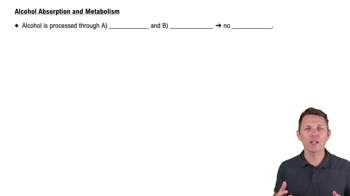
Where does the majority of alcohol absorption occur in the digestive system?
Most alcohol absorption occurs in the small intestine. Only a small amount is absorbed in the stomach.
What is the role of alcohol dehydrogenase (ADH) in alcohol metabolism?
Alcohol dehydrogenase (ADH) converts ethanol into toxic acetaldehyde. This process occurs mainly in the liver but also partially in the stomach.
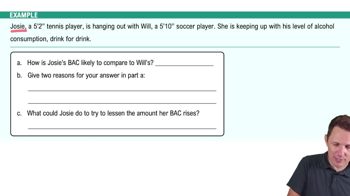
How does body composition influence blood alcohol content (BAC)?
Individuals with more muscle have more water in their bodies, which dilutes alcohol more effectively. This results in a lower BAC compared to those with higher fat content.
Why does consuming alcohol with food slow its absorption?
Food keeps alcohol in the stomach longer, delaying its movement to the small intestine where most absorption occurs. This also allows more time for alcohol to be metabolized by stomach ADH.
What genetic variation can lead to acetaldehyde buildup after drinking alcohol?
A nonfunctional ALDH gene prevents the breakdown of acetaldehyde into acetate. This causes toxic acetaldehyde to accumulate, leading to symptoms like flushing.
Why do males typically have a lower rise in BAC than females after consuming the same amount of alcohol?
Males generally have 30 to 50% more stomach ADH, which breaks down more alcohol before absorption. This results in less alcohol entering the bloodstream compared to females.
 Back
Back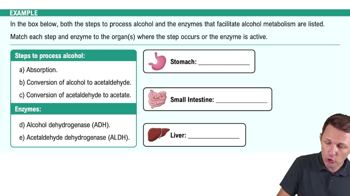
 03:10
03:10