Skip to main content
Nutrition
My Course
Learn
Exam Prep
AI Tutor
Study Guides
Flashcards
Try the app
My Course
Learn
Exam Prep
AI Tutor
Study Guides
Flashcards
Try the app
Back
Foodborne Pathogens definitions
You can tap to flip the card.
Pathogen
You can tap to flip the card.
👆
Pathogen
A microorganism, such as bacteria, virus, or parasite, responsible for causing foodborne illness.
Track progress
Control buttons has been changed to "navigation" mode.
1/15
Related flashcards
Related practice
Recommended videos
Foodborne Pathogens quiz
Foodborne Pathogens
15 Terms
Foodborne Pathogens
12. Food Safety & Regulation
10 problems
Topic
Foodborne Toxins
12. Food Safety & Regulation
10 problems
Topic
12. Food Safety & Regulation
6 topics
15 problems
Chapter
05:21
Bacteria
161
views
02:28
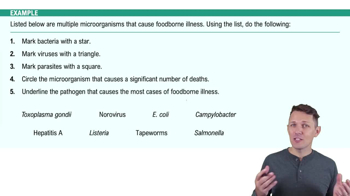
Foodborne Pathogens Example 1
100
views
05:09
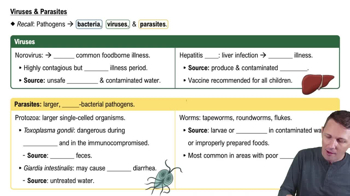
Viruses & Parasites
124
views
1
rank
Terms in this set (15)
Hide definitions
Pathogen
A microorganism, such as bacteria, virus, or parasite, responsible for causing foodborne illness.
Salmonella
A bacterium linked to poultry, eggs, and produce, known for causing the most hospitalizations and deaths from foodborne illness in the U.S.
Staphylococcus aureus
A bacterium commonly found on skin and in noses, producing a heat-stable toxin that can cause illness even after cooking.
Clostridium perfringens
A bacterium thriving in improperly stored foods, especially in buffet settings, often called the 'cafeteria germ.'
Campylobacter
A bacterium frequently found in poultry and raw milk, recognized as the leading bacterial cause of diarrhea.
Escherichia coli
A bacterium with certain strains producing shiga toxin, leading to severe bloody diarrhea, often linked to ground meat and produce.
Listeria
A bacterium found in soft cheeses, raw milk, and deli meats, posing high risk during pregnancy due to potential fetal harm.
Norovirus
A highly contagious virus causing short-term diarrhea and vomiting, commonly spread through unsafe food handling or contaminated water.
Hepatitis A
A virus causing prolonged liver infection, often transmitted via contaminated water or produce, preventable by vaccination.
Protozoa
Single-celled parasites, larger than bacteria, including organisms like Toxoplasma gondii and Giardia intestinalis.
Toxoplasma gondii
A protozoan parasite, often spread via cat feces, dangerous during pregnancy and for immunocompromised individuals.
Giardia intestinalis
A protozoan parasite causing severe diarrhea and vomiting, typically contracted from untreated water.
Worms
Parasitic organisms such as tapeworms, roundworms, and flukes, transmitted through larvae or eggs in contaminated food or water.
Danger Zone
A temperature range where bacteria multiply rapidly in food, increasing the risk of foodborne illness.
Cross Contamination
The transfer of pathogens from one food or surface to another, often leading to the spread of foodborne illness.
 BackBack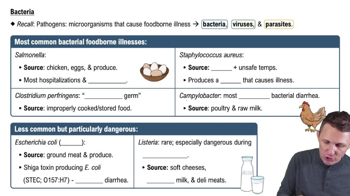
 05:21
05:21