Skip to main content
Nutrition
My Course
Learn
Exam Prep
AI Tutor
Study Guides
Flashcards
Try the app
My Course
Learn
Exam Prep
AI Tutor
Study Guides
Flashcards
Try the app
Back
Foodborne Pathogens quiz
You can tap to flip the card.
What is a pathogen in the context of foodborne illness?
You can tap to flip the card.
👆
What is a pathogen in the context of foodborne illness?
A pathogen is a microorganism, such as bacteria, viruses, or parasites, that causes foodborne illness.
Track progress
Control buttons has been changed to "navigation" mode.
1/15
Related flashcards
Related practice
Recommended videos
Foodborne Pathogens definitions
Foodborne Pathogens
15 Terms
Foodborne Pathogens
12. Food Safety & Regulation
10 problems
Topic
Foodborne Toxins
12. Food Safety & Regulation
10 problems
Topic
12. Food Safety & Regulation
6 topics
15 problems
Chapter
05:21
Bacteria
161
views
02:28
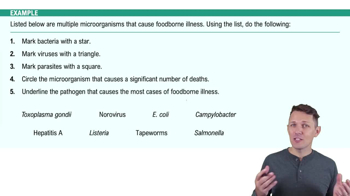
Foodborne Pathogens Example 1
100
views
05:09
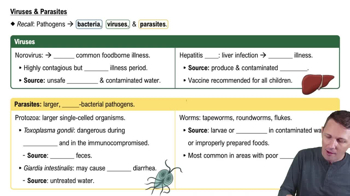
Viruses & Parasites
124
views
1
rank
Terms in this set (15)
Hide definitions
What is a pathogen in the context of foodborne illness?
A pathogen is a microorganism, such as bacteria, viruses, or parasites, that causes foodborne illness.
Which bacteria is most commonly associated with chicken and eggs and causes the most hospitalizations and deaths in the US?
Salmonella is most commonly associated with chicken and eggs and causes the most hospitalizations and deaths from foodborne illness in the US.
How can Salmonella contaminate the inside of an egg?
Salmonella can enter the egg if the shell is cracked or damaged, allowing bacteria from the outside to reach the inside.
What is the main source of Staphylococcus aureus in foodborne illness?
Staphylococcus aureus often comes from people's skin and can contaminate food during handling, especially if food is held at unsafe temperatures.
Why is Staphylococcus aureus particularly dangerous even after cooking food?
It produces a heat-stable toxin that can cause illness even if the bacteria are killed during cooking.
What is Clostridium perfringens commonly referred to as and where is it often found?
Clostridium perfringens is called the 'cafeteria germ' and is often found in improperly cooked or stored food, especially in buffets and cafeterias.
Which bacteria is the most common bacterial cause of diarrhea?
Campylobacter is the most common bacterial cause of diarrhea.
What foods are commonly associated with Campylobacter infection?
Campylobacter is commonly associated with poultry and raw milk.
What makes certain strains of E. coli dangerous?
Certain strains of E. coli produce shiga toxin, which can cause severe bloody diarrhea.
Why is Listeria particularly dangerous for pregnant people?
Listeria can cause loss of the fetus and is especially dangerous during pregnancy.
What foods are commonly associated with Listeria infection?
Listeria is most often found in soft cheeses, raw milk, and deli meats.
Which virus is the most common cause of foodborne illness and how is it transmitted?
Norovirus is the most common cause of foodborne illness and is transmitted through unsafe food handling and contaminated water.
What are the typical symptoms and duration of Norovirus infection?
Norovirus typically causes diarrhea and vomiting lasting a couple of days.
What is Hepatitis A and how is it usually contracted?
Hepatitis A is a liver infection usually contracted from contaminated water or produce washed with contaminated water.
Which parasite is commonly found in cats and poses a risk during pregnancy?
Toxoplasma gondii, which causes toxoplasmosis, is commonly found in cats and is dangerous during pregnancy.
 BackBack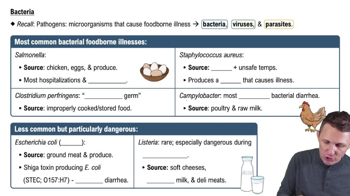
 05:21
05:21