Skip to main content
Nutrition
My Course
Learn
Exam Prep
AI Tutor
Study Guides
Flashcards
Try the app
My Course
Learn
Exam Prep
AI Tutor
Study Guides
Flashcards
Try the app
Back
Hypertension and Minerals definitions
You can tap to flip the card.
Hypertension
You can tap to flip the card.
👆
Hypertension
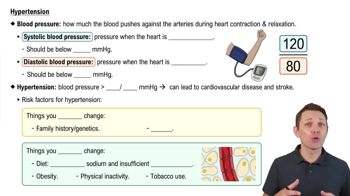
Chronic elevation of blood pressure above 130/80 mmHg, increasing risk for cardiovascular disease and stroke.
Track progress
Control buttons has been changed to "navigation" mode.
1/15
Related flashcards
Related practice
Recommended videos
Hypertension and Minerals quiz
Hypertension and Minerals
15 Terms
Hypertension and Minerals exam
Hypertension and Minerals
29 Terms
Hypertension and Minerals quiz #1
Hypertension and Minerals
10 Terms
Hypertension and Minerals
8. Water and Minerals
10 problems
Topic
Major Mineral: Calcium and Phosphorus
8. Water and Minerals
10 problems
Topic
8. Water and Minerals
10 topics
15 problems
Chapter
02:08
Hypertension and Minerals Example 1
176
views
3
rank
04:40
Hypertension
213
views
3
rank
03:05
DASH Diet
234
views
3
rank
Terms in this set (15)
Hide definitions
Hypertension
Chronic elevation of blood pressure above 130/80 mmHg, increasing risk for cardiovascular disease and stroke.
Blood Pressure
Force exerted by circulating blood on artery walls during heart contraction and relaxation.
Systolic Pressure
Higher blood pressure value measured during heart contraction, ideally below 120 mmHg.
Diastolic Pressure
Lower blood pressure value measured when the heart is relaxed, ideally below 80 mmHg.
Sodium
Major extracellular electrolyte influencing blood volume and pressure; excess intake raises hypertension risk.
Potassium
Primary intracellular electrolyte that helps counteract sodium's effects and supports normal blood pressure.
Magnesium
Essential mineral and electrolyte important for heart and muscle function, contributing to blood pressure regulation.
Calcium
Mineral involved in muscle contraction and nerve signaling, also playing a role in blood pressure control.
DASH Diet
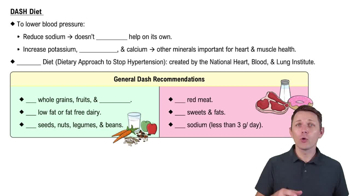
Eating plan emphasizing whole grains, fruits, vegetables, low-fat dairy, and nuts to lower hypertension risk.
Electrolyte
Charged mineral in body fluids, such as sodium, potassium, and magnesium, crucial for fluid balance and nerve function.
Obesity
Excess body fat condition that significantly increases the likelihood of developing hypertension.
Physical Inactivity
Lack of regular movement or exercise, contributing to higher blood pressure and cardiovascular risk.
Diuretic
Medication or substance that increases urine production, reducing blood volume and lowering blood pressure.
Saturated Fat
Type of dietary fat found in animal products, associated with increased cardiovascular and hypertension risk.
Cardiovascular Disease
Group of disorders involving the heart and blood vessels, often resulting from prolonged high blood pressure.
 BackBack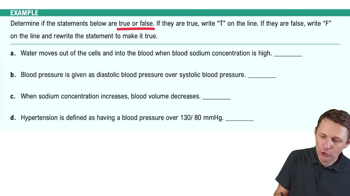
 02:08
02:08