Skip to main content
Nutrition
My Course
Learn
Exam Prep
AI Tutor
Study Guides
Flashcards
Try the app
My Course
Learn
Exam Prep
AI Tutor
Study Guides
Flashcards
Try the app
Back
Introduction to Physical Fitness definitions
You can tap to flip the card.
Physical Fitness
You can tap to flip the card.
👆
Physical Fitness
A state of well-being resulting from consistent body movements and proper nutrition, reflecting optimal health outcomes.
Track progress
Control buttons has been changed to "navigation" mode.
1/15
Related flashcards
Related practice
Recommended videos
Introduction to Physical Fitness quiz
Introduction to Physical Fitness
15 Terms
Introduction to Physical Fitness exam
Introduction to Physical Fitness
30 Terms
Introduction to Physical Fitness
11. Nutrition & Fitness
10 problems
Topic
Exercise
11. Nutrition & Fitness
10 problems
Topic
11. Nutrition & Fitness
5 topics
15 problems
Chapter
Guided course
02:06
Introduction to Physical Fitness
176
views
Guided course
02:57
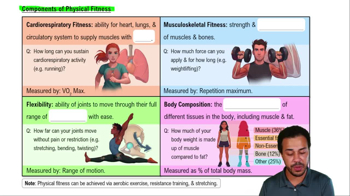
Components of Physical Fitness
150
views
1
rank
Guided course
02:47
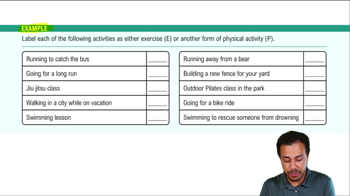
Introduction to Physical Fitness Example 1
144
views
Terms in this set (15)
Hide definitions
Physical Fitness
A state of well-being resulting from consistent body movements and proper nutrition, reflecting optimal health outcomes.
Physical Activity
Any bodily movement that expends energy, including daily tasks and intentional workouts, regardless of purpose.
Exercise
A planned, structured subset of physical activity performed with the specific goal of improving physical fitness.
Nutrition
The intake of food and hydration that fuels bodily movements and directly influences health and fitness outcomes.
Cardiorespiratory Fitness
The capacity of the heart, lungs, and circulatory system to supply muscles with oxygen and nutrients during activity.
VO2 Max
The maximum amount of oxygen the body can utilize during intense exercise, indicating cardiorespiratory capacity.
Musculoskeletal Fitness
The combined strength and endurance of muscles and bones, reflecting the ability to exert and sustain force.
Repetition Maximum
The greatest amount of weight that can be lifted for a specified number of repetitions, measuring strength or endurance.
Flexibility
The ability of joints to move through their full range of motion comfortably and without restriction.
Range of Motion
The extent to which a joint can move in different directions, used to assess flexibility.
Body Composition
The proportion of muscle, fat, and other tissues in the body, often expressed as a percentage of total body mass.
Aerobic Exercise
A type of physical activity that increases heart rate and breathing, enhancing cardiorespiratory fitness.
Resistance Training
A form of exercise involving weights or resistance to improve musculoskeletal strength and endurance.
Stretching
A practice aimed at improving flexibility by lengthening muscles and increasing joint range of motion.
Hydration
The process of maintaining adequate fluid balance, essential for optimal physical performance and health.
 BackBack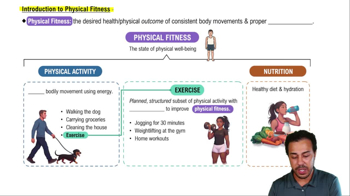
 02:06
02:06