Skip to main content
Nutrition
My Course
Learn
Exam Prep
AI Tutor
Study Guides
Flashcards
Try the app
My Course
Learn
Exam Prep
AI Tutor
Study Guides
Flashcards
Try the app
Back
Major Mineral: Sodium and Potassium definitions
You can tap to flip the card.
Sodium
You can tap to flip the card.
👆
Sodium
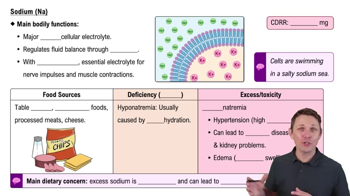
Major extracellular electrolyte crucial for fluid balance, nerve signaling, and muscle function; commonly found in table salt and processed foods.
Track progress
Control buttons has been changed to "navigation" mode.
1/15
Related flashcards
Related practice
Recommended videos
Major Mineral: Sodium and Potassium quiz
Major Mineral: Sodium and Potassium
15 Terms
Major Mineral: Sodium and Potassium exam
Major Mineral: Sodium and Potassium
29 Terms
Major Mineral: Sodium and Potassium quiz #1
Major Mineral: Sodium and Potassium
10 Terms
Major Mineral: Sodium and Potassium
8. Water and Minerals
10 problems
Topic
Hypertension and Minerals
8. Water and Minerals
10 problems
Topic
8. Water and Minerals
10 topics
15 problems
Chapter
02:02
Major Mineral: Sodium and Potassium Example 2
173
views
2
rank
05:34
Sodium (Na)
255
views
2
rank
04:24
Potassium (K)
206
views
1
rank
Terms in this set (15)
Hide definitions
Sodium
Major extracellular electrolyte crucial for fluid balance, nerve signaling, and muscle function; commonly found in table salt and processed foods.
Potassium
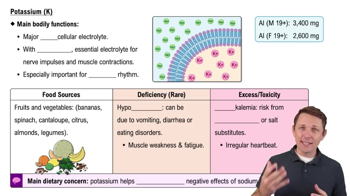
Major intracellular electrolyte essential for heart rhythm, nerve impulses, and muscle contractions; abundant in fruits and vegetables.
Electrolyte
Charged mineral particle in body fluids that regulates fluid balance and electrical activity in cells.
Extracellular Fluid
Fluid outside cells, including blood and interstitial fluid, where sodium concentration is highest.
Intracellular Fluid
Fluid within cells, characterized by high potassium concentration and low sodium levels.
Osmosis
Movement of water across cell membranes driven by electrolyte concentration differences, especially sodium.
Hyponatremia
Condition of abnormally low sodium in blood, often resulting from overhydration and leading to dangerous water imbalance.
Hypernatremia
Condition of excess sodium in blood, increasing risk for hypertension and tissue swelling.
Hypertension
Chronic high blood pressure, often linked to excess sodium intake and a major risk factor for heart disease.
Edema
Swelling of tissues due to fluid accumulation, commonly associated with sodium imbalance.
Hypokalemia
Deficiency of potassium in blood, potentially causing muscle weakness and fatigue, often due to vomiting or diarrhea.
Hyperkalemia
Excess potassium in blood, usually from supplements, which can result in irregular heartbeat.
Table Salt
Common dietary source of sodium, chemically known as sodium chloride, frequently added to foods.
Processed Foods
Foods with added sodium for flavor and preservation, major contributors to dietary sodium intake.
Salt Substitute
Product replacing some sodium with potassium, used to lower sodium intake but can cause excess potassium if overused.
 BackBack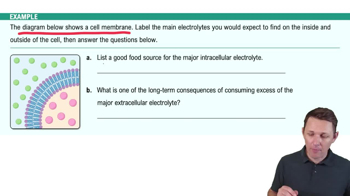
 02:02
02:02