Skip to main content
Nutrition
My Course
Learn
Exam Prep
AI Tutor
Study Guides
Flashcards
Try the app
My Course
Learn
Exam Prep
AI Tutor
Study Guides
Flashcards
Try the app
Back
Nutrients definitions
3 students found this helpful
You can tap to flip the card.
Nutrient
You can tap to flip the card.
👆
Nutrient
A chemical compound in food required for growth and maintenance of life, necessary for proper body function.
Track progress
Control buttons has been changed to "navigation" mode.
1/15
Related flashcards
Related practice
Recommended videos
Nutrients quiz
Nutrients
15 Terms
Nutrients exam
Nutrients
29 Terms
Nutrients
1. Science of Nutrition
10 problems
Topic
Macronutrients
1. Science of Nutrition
10 problems
Topic
1. Science of Nutrition
8 topics
15 problems
Chapter
06:17
Nutrients and Disease
1091
views
40
rank
04:21
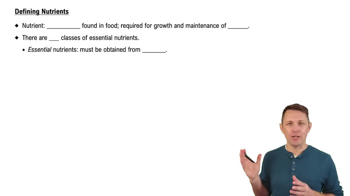
Defining Nutrients
1967
views
120
rank
02:23
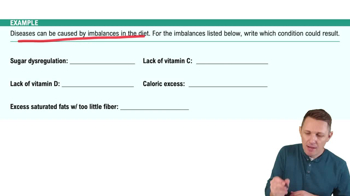
Nutrients Example 2
751
views
27
rank
Terms in this set (15)
Hide definitions
Nutrient
A chemical compound in food required for growth and maintenance of life, necessary for proper body function.
Macronutrient
A class of nutrients needed in large amounts, providing energy through cellular metabolism; includes carbohydrates, lipids, and proteins.
Micronutrient
A class of nutrients required in small amounts, supporting physiological functions without supplying energy; includes vitamins and minerals.
Carbohydrate
An organic macronutrient serving as a primary energy source, found in foods like grains, fruits, and vegetables.
Lipid
A macronutrient, also known as fat, providing energy and supporting cell structure; includes saturated and unsaturated types.
Protein
A macronutrient composed of amino acids, essential for tissue growth, repair, and various bodily functions.
Vitamin
An organic micronutrient required in small amounts for specific physiological processes, often acting as coenzymes.
Mineral
An inorganic micronutrient, such as calcium or potassium, vital for structural and regulatory roles in the body.
Water
A vital inorganic nutrient necessary for nearly all physiological functions, required in greater amounts than any other nutrient.
Essential Nutrient
A substance that must be obtained from food because the body cannot synthesize it in sufficient quantities.
Organic Molecule
A compound containing carbon, such as carbohydrates, lipids, proteins, and vitamins, fundamental to living organisms.
Inorganic Molecule
A compound lacking carbon, such as minerals and water, crucial for various bodily functions.
Obesity
A chronic condition characterized by excessive body fat accumulation, increasing risk for multiple health problems.
Diabetes
A metabolic disorder marked by impaired regulation of blood glucose, often linked to excess sugar intake and obesity.
Fiber
A type of carbohydrate not digested by the body, important for digestive health and often lacking in typical diets.
 BackBack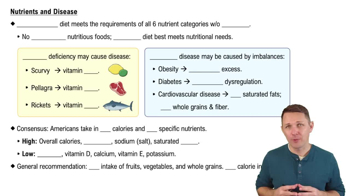
 06:17
06:17