Pearson+ LogoPearson+ Logo

Nutrition During Gestation quiz #1 Flashcards

Back
Nutrition During Gestation quiz #1
Control buttons has been changed to "navigation" mode.
1/10
  • Why is proper nutrition during pregnancy important for the development of the placenta and overall pregnancy outcomes?

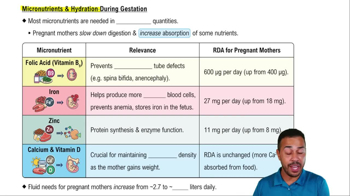
    Proper nutrition during pregnancy is important because increased nutrient needs support the healthy development of the placenta and fetus. Adequate intake of key nutrients like protein, carbohydrates, folic acid, iron, and zinc helps prevent complications such as neural tube defects and anemia, while gradual weight gain tailored to pre-pregnancy BMI promotes healthy birth weights and reduces pregnancy risks.
  • How do protein and carbohydrate needs change during pregnancy compared to pre-pregnancy levels?

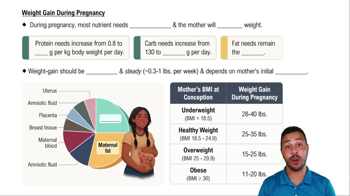
    Protein and carbohydrate needs both increase during pregnancy, while fat needs remain unchanged. This supports fetal growth and maternal tissue development.
  • What is the recommended rate of weekly weight gain for pregnant women throughout gestation?

    Pregnant women should gain weight slowly and steadily, averaging about 0.3 to 1 pound per week. The exact recommendation depends on the mother's pre-pregnancy BMI.
  • Why do calcium and vitamin D RDAs remain unchanged during pregnancy?

    Calcium and vitamin D RDAs remain unchanged because pregnant women absorb these nutrients more efficiently due to physiological adaptations. This increased absorption meets the needs for fetal bone development without raising intake.
  • What is the recommended daily fluid intake for pregnant women?

    Pregnant women should consume about 3 liters of fluids daily, up from the pre-pregnancy recommendation of 2.7 liters. This helps support increased blood volume and fetal needs.
  • What is morning sickness and when is it most common during pregnancy?

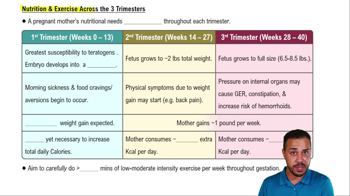
    Morning sickness refers to nausea and vomiting that is most common in the first trimester but can occur at any time during gestation. It is usually not serious but can require medical attention in extreme cases.
  • What is PICA and why is it a concern during pregnancy?

    PICA is a condition where pregnant women crave non-food items like clay or dirt. It requires medical guidance because consuming non-food substances can be harmful.
  • How do calorie needs change in the second and third trimesters for women with a healthy BMI?

    In the second trimester, women should consume about 350 extra kilocalories per day, and in the third trimester, about 450 extra kilocalories per day. These increases support fetal growth and maternal energy needs.
  • What are some common food cravings and aversions experienced during pregnancy?

    Common cravings include citrus fruits, ice cream, pickles, and chocolate, while aversions often involve spicy foods, fried foods, coffee, and tea. These preferences can vary widely among individuals.
  • How much exercise is recommended for pregnant women, and what are its benefits?

    Pregnant women should aim for at least 150 minutes of low to moderate intensity exercise per week. Regular exercise improves pregnancy outcomes and reduces risks of gestational diabetes and other complications.