Skip to main content
Nutrition
My Course
Learn
Exam Prep
AI Tutor
Study Guides
Flashcards
Try the app
My Course
Learn
Exam Prep
AI Tutor
Study Guides
Flashcards
Try the app
Back
Trace minerals: Iron and Copper definitions
You can tap to flip the card.
Trace mineral
You can tap to flip the card.
👆
Trace mineral
A nutrient required in amounts less than 100 mg per day, essential for various physiological functions.
Track progress
Control buttons has been changed to "navigation" mode.
1/15
Related flashcards
Related practice
Recommended videos
Trace minerals: Iron and Copper quiz
Trace Minerals: Iron and Copper
15 Terms
Trace minerals: Iron and Copper exam
Trace Minerals: Iron and Copper
30 Terms
Trace minerals: Iron and Copper
8. Water and Minerals
10 problems
Topic
Trace minerals: Fluoride and Iodine
8. Water and Minerals
10 problems
Topic
8. Water and Minerals
10 topics
15 problems
Chapter
05:30
Iron (Fe)
165
views
3
rank
03:03
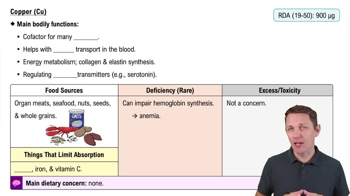
Copper (Cu)
156
views
2
rank
01:48
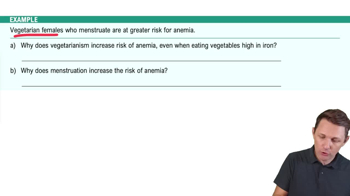
Trace Minerals: Iron and Copper Example 1
127
views
2
rank
Terms in this set (15)
Hide definitions
Trace mineral
A nutrient required in amounts less than 100 mg per day, essential for various physiological functions.
Iron
An element central to oxygen transport in blood and muscles, found in both animal and plant foods.
Hemoglobin
A protein in red blood cells responsible for carrying oxygen throughout the body.
Myoglobin
A muscle protein that stores oxygen for use during periods of increased demand.
Heme iron
A form of iron present in animal products, highly bioavailable and efficiently absorbed by the body.
Non-heme iron
A form of iron found in plant foods, less efficiently absorbed compared to its animal-based counterpart.
Meat factor
A component in animal foods that enhances the absorption of iron from plant sources when consumed together.
Iron-deficiency anemia
A condition marked by insufficient healthy red blood cells due to inadequate iron, leading to fatigue and pale skin.
Copper
A trace element acting as a cofactor for enzymes, crucial for iron metabolism and connective tissue formation.
Cofactor
A non-protein chemical compound required for enzyme activity, often a mineral like copper.
Enzyme
A biological catalyst that speeds up chemical reactions, often requiring minerals for proper function.
Collagen
A structural protein in connective tissues, whose synthesis depends on adequate copper levels.
Elastin
A protein providing elasticity to tissues, with its production influenced by copper availability.
RDA
The recommended daily intake level of a nutrient considered sufficient for most healthy individuals.
Fortified foods
Products enhanced with added nutrients, such as iron, to help meet dietary requirements.
 BackBack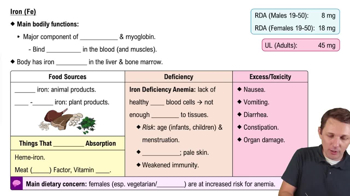
 05:30
05:30