 Back
BackFat-Soluble Vitamins in Nutrition
 01:33
01:33
Terms in this set (21)
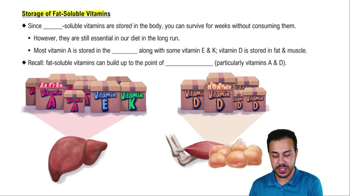
Fat-soluble vitamins
The fat-soluble vitamins are Vitamin A, Vitamin D, Vitamin E, and Vitamin K.
Where and how are fat-soluble vitamins absorbed and transported?
They are absorbed in the small intestine with dietary fats and transported via chylomicrons through the lymphatic system into the bloodstream.
Roles of Vitamin A
Supports immune function, cell growth, and reproduction, and maintains epithelial tissues.
Roles of Vitamin D in the body
Regulates calcium and phosphorus absorption, supports bone health, and modulates immune responses.
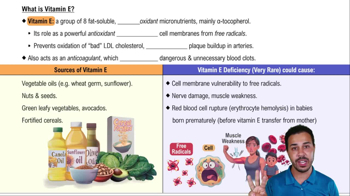
Roles of Vitamin E
Acts as a powerful antioxidant, protecting cell membranes from oxidative damage.
Roles of Vitamin K beyond clotting
It's essential for blood clotting and also supports bone metabolism and vascular health.
Vitamin A and Vitamin D have clear toxicity symptoms, including nausea, headache, and organ damage.
Toxicity symptoms of Vitamin A
Symptoms include headache, dizziness, nausea, blurred vision, and liver damage.
Toxicity symptoms of Vitamin D
Symptoms include hypercalcemia, nausea, weakness, and kidney damage.
Deficiency symptoms of Vitamin A
Deficiency can cause night blindness, dry skin, and increased infection risk.
Deficiency symptoms of Vitamin D
Deficiency leads to rickets in children and osteomalacia in adults, causing weak bones.
Fat-soluble vitamins produced by intestinal bacteria
Vitamin K
Fat-soluble vitamins that are antioxidants
Vitamin E and Vitamin A (as beta-carotene)
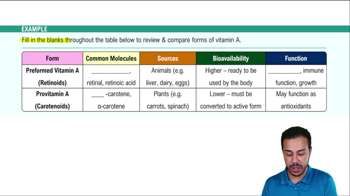
Precursor/provitamin form of Vitamin A
Beta-carotene is the provitamin form of Vitamin A found in plant foods.
Food sources of beta-carotene (Vitamin A precursor)
Carrots, sweet potatoes, spinach, and kale are rich in beta-carotene.
Food sources of pre-formed Vitamin A
Liver, fish oils, milk, and eggs contain pre-formed Vitamin A (retinol).
Food sources of Vitamin D
Fatty fish, fortified milk, and egg yolks are good sources of Vitamin D.
Food sources of Vitamin K
Leafy green vegetables like spinach and kale provide Vitamin K.
Food sources of Vitamin E
Nuts, seeds, and vegetable oils are rich in Vitamin E.
How is Vitamin D activated in the body?
Vitamin D is activated first in the skin by UV light forming a precursor, then hydroxylated in the liver and kidneys to its active form.
Two fat-soluble vitamins with clear toxicity symptoms
Vitamin A and Vitamin D have clear toxicity symptoms that can cause serious health issues.