 Back
BackMinerals in Nutrition: Functions, Sources, and Health Impacts
 05:33
05:33
Terms in this set (20)
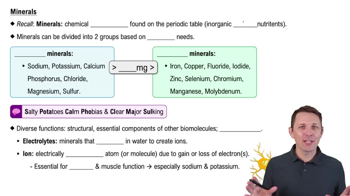
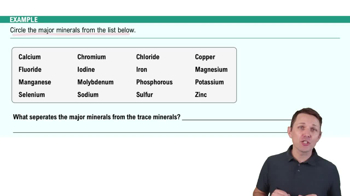
Difference between major and trace minerals
Major minerals are required in amounts greater than 100 mg/day, while trace minerals are needed in smaller amounts (less than 100 mg/day).
Name the major minerals
Major minerals include sodium, potassium, calcium, phosphorus, magnesium, chloride, and sulfur.
Factors affecting mineral bioavailability, absorption, and retention
Factors include mineral form, presence of other nutrients, age, health status, and dietary components like phytates and oxalates.
Functions of sodium
Sodium regulates fluid balance, nerve transmission, and muscle contraction.
Food sources of sodium
Common sources are table salt, processed foods, and canned soups.
Sodium toxicity and deficiency symptoms
Toxicity can cause hypertension; deficiency may lead to hyponatremia, causing muscle cramps and confusion.
Functions of potassium
Potassium maintains fluid balance, supports nerve signals, and muscle contractions.
Food sources of potassium
Found in bananas, oranges, potatoes, and spinach.
Potassium toxicity and deficiency symptoms
Toxicity can cause irregular heartbeat; deficiency may cause muscle weakness and cramps.
Functions of calcium
Calcium is essential for bone and teeth structure, muscle function, and nerve signaling.
Food sources of calcium
Sources include dairy products, leafy greens, and fortified foods.
Calcium toxicity and deficiency symptoms
Toxicity may cause kidney stones; deficiency leads to osteoporosis and muscle spasms.
Functions of phosphorus
Phosphorus supports bone formation, energy metabolism, and acid-base balance.
Food sources of phosphorus
Found in meat, dairy, nuts, and whole grains.
Phosphorus toxicity and deficiency symptoms
Toxicity can impair calcium metabolism; deficiency is rare but may weaken bones.
Functions of magnesium
Magnesium is involved in enzyme reactions, muscle and nerve function, and bone health.
Food sources of magnesium
Sources include nuts, seeds, whole grains, and green leafy vegetables.
Magnesium toxicity and deficiency symptoms
Toxicity may cause diarrhea; deficiency can lead to muscle cramps and irregular heartbeat.
Role of minerals in healthy bone tissue development
Calcium, phosphorus, and magnesium are critical for bone structure and strength.
Minerals and osteoporosis
Inadequate calcium and magnesium intake contributes to bone loss and increased risk of osteoporosis.