 Back
Nutrition: Electrolytes, Vitamins, Minerals, and Antioxidants
 05:33

Terms in this set (15)
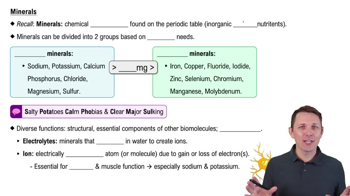
Intracellular electrolytes are mainly potassium and magnesium, while extracellular electrolytes include sodium, chloride, and calcium.
Electrolytes regulate fluid balance, nerve transmission, and muscle contraction.
Dairy products, leafy green vegetables, and fortified foods are rich sources of calcium.
Nuts, whole grains, green leafy vegetables, and legumes are rich in magnesium.
Table salt (sodium chloride), seaweed, and tomatoes are good sources of chloride.
Meat, dairy, nuts, and whole grains provide abundant phosphorus.
Bananas, potatoes, spinach, and oranges are high in potassium.
Carrots, sweet potatoes, and dark leafy greens are rich in beta-carotene.
Nuts, seeds, vegetable oils, and green leafy vegetables are good sources of vitamin E.
Iodine is essential for thyroid hormone production, which regulates metabolism and growth.
Manganese supports bone formation, metabolism, and antioxidant functions.
Antioxidants neutralize free radicals, preventing cellular damage and oxidative stress.
Vitamin D enhances calcium absorption in the intestines, supporting bone health.
Vitamin C aids collagen synthesis, enhances iron absorption, and supports immune function.
Smokers, elderly, and people with limited fruit and vegetable intake are at risk for vitamin C deficiency.