 Back
BackWater and Fluid Balance in Nutrition
 05:47
05:47
Terms in this set (15)
Major roles of water in the body
Water acts as a solvent, transports nutrients and waste, regulates body temperature, lubricates joints, and participates in chemical reactions like hydrolysis.
Define hydrolysis
It's a chemical reaction where water breaks down molecules into smaller units.
Percentage of body that is water
About 60% of the human body is water, making it the most abundant nutrient.
Nutrient needed in greatest amount by the body
Water is the nutrient required in the greatest amount by the body.
Extracellular fluid compartment
It's the fluid outside cells, including interstitial and intravascular fluids.
Intracellular fluid compartment
It's the fluid contained within the cells.
Interstitial fluid compartment
It's the fluid that surrounds and bathes the body’s cells.
Intravascular fluid compartment
It's the fluid within blood vessels, mainly blood plasma.
How is fluid balance regulated in the body?
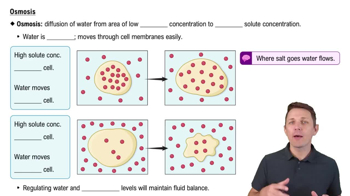
Fluid balance is regulated by the kidneys, brain, and hormones like antidiuretic hormone (ADH) and aldosterone.
How is blood pressure regulated related to fluid balance?
Blood pressure is regulated by fluid volume and hormones such as renin, angiotensin, and aldosterone affecting blood vessel constriction and fluid retention.
Daily water requirement for the body
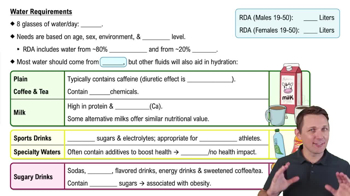
The body requires about 2 to 3 liters of water daily, depending on factors like activity and environment.
How must your fluid requirement be met?
Fluid needs are met through drinking water, other beverages, and water contained in foods.
Which fluids count towards daily fluid intake?
All beverages including water, tea, coffee, milk, and juices count towards daily fluid intake.
How should urine look if well hydrated?
Urine should be pale yellow or clear if you are well hydrated.
Three tips to increase water intake
Carry a water bottle,
drink a glass of water before meals,
and eat water-rich fruits and vegetables.