 Back
BackWater-Soluble Vitamins: Absorption, Roles, Deficiencies, and Sources
 02:37
02:37
Terms in this set (21)
Where are water-soluble vitamins absorbed and transported?
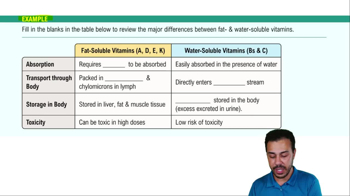
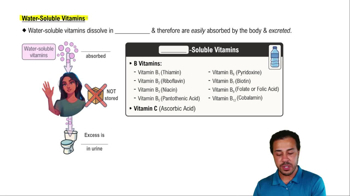
Water-soluble vitamins are absorbed mainly in the small intestine and transported via the bloodstream to tissues.
Name a major role of vitamin C.
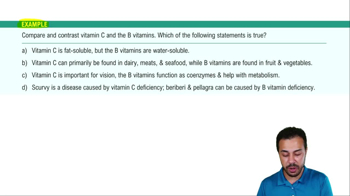
Vitamin C acts as an antioxidant and is essential for collagen synthesis.
What is the deficiency disease caused by lack of vitamin C?
Vitamin C deficiency causes scurvy, characterized by bleeding gums and poor wound healing.
What is a major role of folate (vitamin B9)?
Folate is crucial for DNA synthesis and cell division.
What deficiency results from folate deficiency?
Folate deficiency causes megaloblastic anemia and can lead to neural tube defects in pregnancy.
Which form of folate is more bioavailable: folate or folic acid?
Folic acid (synthetic form) is more bioavailable than natural food folate.
What is the active form of riboflavin used in metabolism?
Riboflavin is used as FMN and FAD in the TCA cycle and electron transport chain.
In what form is niacin used in the body?
Niacin is used as NAD and NADP in redox reactions during metabolism.
Which water-soluble vitamins act as antioxidants?
Vitamin C and riboflavin have antioxidant roles.
What is the recommended form to consume most vitamins?
Most vitamins should be consumed through food rather than supplements for better absorption and bioavailability.
Name a food source rich in vitamin C.
Citrus fruits like oranges and kiwi are rich sources of vitamin C.
Name a food source rich in folate.
Leafy green vegetables like spinach and legumes are rich in folate.
What is a common deficiency symptom of niacin deficiency?
Niacin deficiency causes pellagra, characterized by dermatitis, diarrhea, and dementia.
What is a common deficiency symptom of riboflavin deficiency?
Riboflavin deficiency causes ariboflavinosis, with symptoms like sore throat and cracked lips.
How are water-soluble vitamins transported in the body?
They are transported freely in the plasma without carriers.
Why are water-soluble vitamins less likely to cause toxicity?
Because excess water-soluble vitamins are excreted in urine, reducing toxicity risk.
What is the role of vitamin B6 in metabolism?
Vitamin B6 acts as a coenzyme in amino acid metabolism.
What deficiency results from vitamin B6 deficiency?
Vitamin B6 deficiency can cause peripheral neuropathy and anemia.
Name a food source rich in vitamin B6.
Meat, whole grains, and bananas are good sources of vitamin B6.
What is the role of vitamin B12 in the body?
Vitamin B12 is essential for red blood cell formation and nervous system function.
What deficiency results from vitamin B12 deficiency?
Vitamin B12 deficiency causes pernicious anemia and neurological symptoms.