 Back
Achieving and Maintaining a Healthful Body Weight: Concepts, Methods, and Influences
Study Guide - Smart Notes
 Tailored notes based on your materials, expanded with key definitions, examples, and context.
Achieving and Maintaining a Healthful Body Weight
Defining a Healthful Body Weight
A healthful body weight is not a single number, but rather a range that is appropriate for an individual's age, physical development, genetic background, and lifestyle. It is a weight that can be sustained without severe dietary restriction, is compatible with normal blood pressure, lipid levels, and glucose tolerance, and is supported by good eating habits and regular physical activity. Importantly, it is also a weight that is acceptable to the individual and not dictated by societal or media standards.
Key Point: Healthful body weight varies between individuals and cultures, and changes over time.
Key Point: There is no single body type that defines health; healthful weight is multifactorial.
Example: A physically active person who is moderately overweight may still be considered healthy.
Categories of Body Weight
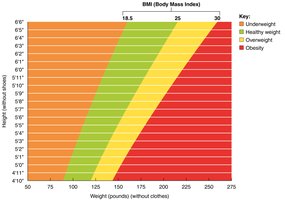
Body weight is classified into five categories based on health risk, primarily using the Body Mass Index (BMI):
Underweight: BMI < 18.5 kg/m2 (increased health risks due to insufficient body fat)
Normal weight: BMI 18.5–24.9 kg/m2 (lowest disease risk)
Overweight: BMI 25–29.9 kg/m2 (moderate excess weight)
Obesity: BMI 30–39.9 kg/m2 (excess weight adversely affects health)
Severe obesity: BMI > 40 kg/m2 (very high risk of serious health complications)
Methods to Evaluate Body Weight
Three primary methods are used to evaluate whether a person's body weight is healthful:
Body Mass Index (BMI): Expresses the ratio of weight to height squared. Formula: Limitations: Does not distinguish between muscle and fat, and may not be accurate for athletes, children, or older adults.
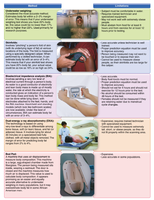
Body Composition: Measures proportion of body fat and lean mass. Methods include underwater weighing, skinfold measurements, bioelectrical impedance analysis (BIA), dual-energy x-ray absorptiometry (DXA), and Bod Pod. Limitations: All methods provide estimates with varying degrees of error (3–20%).
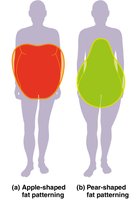
Fat Distribution Pattern: Assessed by waist circumference. Increased risk of chronic disease above 40 inches for males and 35 inches for females. Apple-shaped: Upper body fat, higher risk for chronic diseases. Pear-shaped: Lower body fat, no significant increased risk.
Energy Balance: Body Weight Regulation
Concept of Energy Balance
Energy balance is the relationship between energy intake (calories from food) and energy expenditure (calories burned). Maintaining a stable body weight requires energy intake to equal energy expenditure.
Energy Intake: Calories consumed from food and beverages.
Energy Expenditure: Includes basal metabolic rate (BMR), thermic effect of food (TEF), and physical activity.
Formula for Calories in One Pound of Fat:

Components of Energy Expenditure
Basal Metabolic Rate (BMR): Energy expended at rest to maintain basic body functions. Accounts for 60–75% of total energy expenditure. Estimation: Males: body weight (kg) × 1.0 kcal/kg/hr; Females: body weight (kg) × 0.9 kcal/kg/hr.
Thermic Effect of Food (TEF): Energy used to digest, absorb, and metabolize food. About 5–10% of meal energy.
Physical Activity: Includes exercise and nonexercise activity thermogenesis (NEAT). Represents 15–35% of total energy output.
Limitations of the Energy Balance Equation
The traditional energy balance equation is simple and static, not accounting for dynamic physiological adaptations or brain regulation of food intake. New models propose that the brain integrates external and internal signals to regulate body weight.
Factors Influencing Body Weight
Biological and Genetic Factors
Body weight is influenced by genetic, metabolic, and physiologic factors. Genetics can account for 40–75% of BMI variation, with multiple genes involved.
Key Genes: FTO (fat mass and obesity-associated gene), MC4R (melanocortin 4 receptor gene)
Hypotheses:
Thrifty gene hypothesis: Some people are genetically predisposed to expend less energy and gain weight.
Set-point hypothesis: Body weight is regulated within a set range.
Protein leverage hypothesis: Humans have a fixed protein target; low-protein diets may lead to overeating.
Drifty gene hypothesis: Random genetic drift affects susceptibility to obesity.
Metabolic Factors
Relatively low metabolic rate
Low spontaneous physical activity
Low sympathetic nervous system activity
Low rate of fat utilization for energy
Low thyroid hormone or elevated cortisol
Certain prescription medications
Physiologic Factors
Satiety Mechanisms: Hypothalamic cells regulate hunger and fullness.
Hormones:
Leptin: Reduces food intake; obese individuals may be insensitive to leptin.
Ghrelin: Stimulates appetite; increases after weight loss.
PYY: Decreases appetite; less increase in obese individuals after meals.
Other Factors: Serotonin, cholecystokinin (CCK), blood glucose levels, stomach expansion, nutrient absorption, beta-endorphins, neuropeptide Y.
Sociocultural Factors
Levels of physical activity
Culture and societal pressures
Social determinants of health (SDOH): access to healthcare, healthful foods, transportation, socioeconomic status, employment, family status, environmental stress
Summary Table: Body Composition Assessment Methods
Method | Description | Limitations |
|---|---|---|
Underwater Weighing | Measures body density by water displacement | Requires special equipment; not suitable for all populations |
Skinfold Measurements | Measures thickness of skinfolds at specific sites | Accuracy depends on technician skill; may not reflect visceral fat |
Bioelectrical Impedance Analysis (BIA) | Measures resistance to electrical current | Accuracy affected by hydration status |
Dual-Energy X-ray Absorptiometry (DXA) | Uses X-rays to measure bone, fat, and lean tissue | Expensive; limited availability |
Bod Pod | Measures air displacement to estimate body composition | Expensive; not suitable for some populations |
Summary Table: Fat Distribution Patterns
Pattern | Description | Health Risk |
|---|---|---|
Apple-shaped | Upper body fat | Increased risk for chronic diseases |
Pear-shaped | Lower body fat | No significant increased risk |
Summary Table: Components of Energy Expenditure
Component | Description | % of Total Energy Expenditure |
|---|---|---|
Basal Metabolic Rate (BMR) | Energy expended at rest | 60–75% |
Thermic Effect of Food (TEF) | Energy used to digest, absorb, metabolize food | 5–10% |
Physical Activity | Energy used for movement and exercise | 15–35% |
Key Takeaways
Healthful body weight is individualized and multifactorial.
BMI, body composition, and fat distribution are key methods for evaluating body weight.
Energy balance is central to weight regulation, but the equation is limited by physiological and environmental factors.
Biological, genetic, metabolic, physiologic, and sociocultural factors all influence body weight.
