 Back
BackCarbohydrates: Structure, Function, Digestion, and Health Implications
Study Guide - Smart Notes
 Tailored notes based on your materials, expanded with key definitions, examples, and context.
Carbohydrates: Structure, Function, and Recommendations
Functions of Carbohydrates in the Body
Carbohydrates are essential macronutrients that serve multiple physiological roles in the human body. Their primary function is to provide energy, but they also contribute to protein sparing, blood glucose regulation, digestive health, and cellular recognition.
Energy: Carbohydrates are the main fuel source for the brain and central nervous system.
Protein Sparing: Adequate carbohydrate intake prevents the breakdown of proteins for energy.
Blood Glucose Regulation: Carbohydrates help maintain stable blood glucose levels.
Digestive Health: Dietary fiber, a type of carbohydrate, supports gut health.
Cell Recognition & Structural Roles: Carbohydrates are involved in cell signaling and structural integrity.
Classification of Carbohydrates
Carbohydrates are classified as simple or complex based on their chemical structure and digestibility.
Simple Carbohydrates: Include monosaccharides and disaccharides, which are quickly digested and absorbed.
Complex Carbohydrates: Include oligosaccharides and polysaccharides, which require more digestion and provide sustained energy.
Simple Carbohydrates: Monosaccharides
Monosaccharides are the most basic form of carbohydrates, consisting of a single sugar molecule.
Glucose: Most abundant sugar in the diet; primary energy source.
Fructose: Sweetest natural sugar; found in fruits and high-fructose corn syrup.
Galactose: Not found alone in foods; combines with glucose to form lactose.

Simple Carbohydrates: Disaccharides
Disaccharides are composed of two monosaccharide units.
Lactose: Glucose + galactose; found in milk.
Maltose: Glucose + glucose; formed during starch breakdown.
Sucrose: Glucose + fructose; found in table sugar and honey.
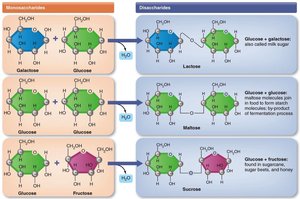
Complex Carbohydrates: Oligosaccharides and Polysaccharides
Oligosaccharides: Contain 3-10 monosaccharide units; examples include raffinose and stachyose, commonly found in beans and legumes. These are often hard to digest and can produce gas due to bacterial fermentation in the large intestine.
Polysaccharides: Consist of hundreds to thousands of glucose molecules; include starch, glycogen, and fiber.

Polysaccharides: Starch, Glycogen, and Fiber
Starch: Storage form of glucose in plants; found in grains, legumes, and tubers.
Glycogen: Storage form of glucose in animals; stored in liver and muscles. Glycogen is hydrolyzed sequentially from the ends of its branches to release glucose.
Fiber: Structural polysaccharide in plants; nondigestible by human enzymes.
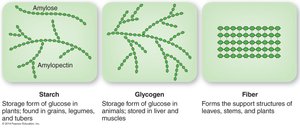
Glycogen: Storage and Utilization
Glycogen is the primary storage form of glucose in humans, located in the liver and muscles.
Liver Glycogen: Average 70 g (280 kcal); maintains blood glucose levels.
Muscle Glycogen: Average 120 g (480 kcal); fuels muscle activity.
Excess Carbohydrate: Stored as fat in adipose tissue when glycogen stores are full.
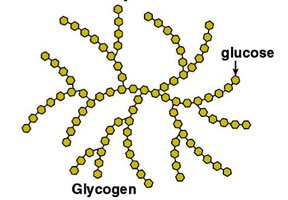
Dietary Fiber: Types and Health Effects
Dietary fiber is a structural polysaccharide found in plants and is classified as soluble or insoluble.
Soluble Fiber: Dissolves in water; found in citrus fruits, berries, oats, and beans. Helps lower cholesterol and regulate blood glucose.
Insoluble Fiber: Does not dissolve in water; found in whole grains and vegetables. Promotes regular bowel movements and prevents constipation.
Gut Health: Fiber is crucial for maintaining gut health and preventing conditions like diverticulosis and diverticulitis.
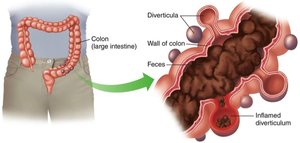

Soluble Fiber and LDL Reduction
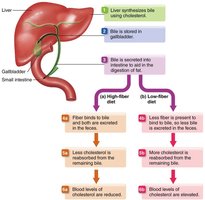
Soluble fiber aids in cholesterol excretion by binding bile acids synthesized from cholesterol, leading to reduced blood cholesterol levels.
Bile Acid Synthesis: Body uses cholesterol to produce bile acids.
Excretion: Soluble fiber binds bile acids, promoting their excretion and lowering LDL cholesterol.
Whole Grains, Fiber, and Disease Prevention
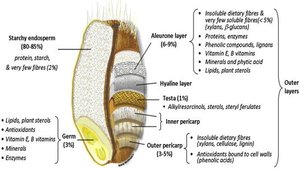
Whole grains and fiber-rich foods are associated with numerous health benefits, including reduced risk of heart disease, type 2 diabetes, and gastrointestinal disorders.
Whole Grains: Contain all parts of the grain kernel, including bran, germ, and endosperm, providing fiber, vitamins, and minerals.
Health Benefits: Regular consumption of whole grains and fiber supports cardiovascular health, weight management, and digestive function.
Fiber Recommendations
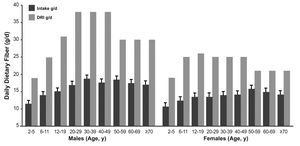
Most Americans do not meet the recommended intake for dietary fiber.
Adequate Intake (AI): 25 g/day for women; 38 g/day for men; or 14 g per 1,000 kcal consumed.
Sources: Preferably from food; supplements if necessary. Water intake is important when increasing fiber.
Good Source: Foods with more than 3 g fiber per serving.

Fiber Intake vs. Recommendations
There is a gap between actual fiber intake and recommended levels across age and gender groups.
Case Study: Soluble vs. Insoluble Fiber
Soluble Fiber: Softens stools and helps regulate cholesterol; found in oatmeal, beans, oranges.
Insoluble Fiber: Adds bulk and promotes regularity; found in whole grains, leafy vegetables.
Importance: Both types are needed for optimal gut health and regular bowel movements.
Carbohydrate Digestion, Absorption, and Transport
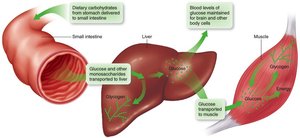
Carbohydrates are absorbed as monosaccharides (glucose, fructose, galactose). Fructose and galactose are converted to glucose in the liver. Glucose has three fates:
Circulates in the blood as a primary energy source.
Stored as glycogen in liver and muscles.
Excess stored as triglycerides in adipose tissue.
Carbohydrate Recommendations
RDA: 130 g/day to fuel the brain; more needed for daily activities.
AMDR: 45-65% of daily calories from carbohydrates.
Complex, Fiber-Rich Sources: Fruits, vegetables, whole grains, beans.
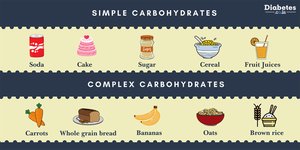
Simple Carbohydrates: White bread, soda, sweets; associated with tooth decay, type 2 diabetes, heart disease, GI disorders, overweight/obesity.
Artificial Sweeteners
Artificial sweeteners are classified as nutritive or non-nutritive.
Nutritive Sweeteners: Sucrose, fructose, honey, brown sugar; provide 4 kcal/gram. Sugar alcohols provide 2-3 kcal/gram and are absorbed slowly.
Non-Nutritive Sweeteners: Provide little or no energy; safe for adults, children, and people with diabetes in limited amounts.
Weight Management: Use of artificial sweeteners does not guarantee prevention of weight gain; some foods may still contain calories and increase cravings.
Aspartame
Aspartame is a widely used artificial sweetener. Recent findings suggest it may be a possible cause of cancer in humans, though regulatory agencies maintain it is generally safe. 
Key Terms and Definitions
Monosaccharide: Single sugar molecule; basic unit of carbohydrates.
Disaccharide: Two monosaccharides joined together.
Oligosaccharide: Short chain of 3-10 monosaccharides.
Polysaccharide: Long chain of hundreds to thousands of monosaccharides.
Fiber: Nondigestible carbohydrate found in plants.
Glycogen: Storage form of glucose in animals.
RDA: Recommended Dietary Allowance.
AMDR: Acceptable Macronutrient Distribution Range.
Summary Table: Simple vs. Complex Carbohydrates
Type | Structure | Examples | Digestibility |
|---|---|---|---|
Simple | Monosaccharides, Disaccharides | Glucose, Sucrose, Lactose | Rapid |
Complex | Oligosaccharides, Polysaccharides | Starch, Fiber, Glycogen | Slow |
Equations and Formulas
General Formula for Monosaccharides:
Formation of Disaccharides:
Additional info: Academic context was added to clarify fiber types, digestion, and health implications.
