Back
BackCell Membrane Structure and Transport Mechanisms: Foundations for Nutrition Science
Study Guide - Smart Notes
 Tailored notes based on your materials, expanded with key definitions, examples, and context.
Cell Membrane Structure and Function
Overview of the Cell Membrane
The cell membrane is a fundamental structure found in all cells, serving as a barrier that separates the cell's interior from its external environment. It plays a critical role in communication, transport, and maintaining cellular integrity.
Function: Separates the cell from its environment, facilitates communication, and regulates the entry and exit of substances (selective permeability).
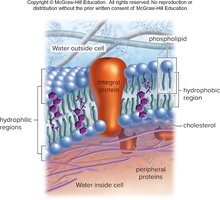
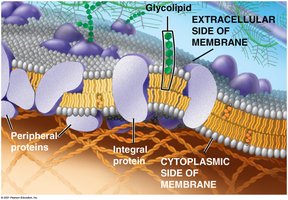
Structure: Composed primarily of a phospholipid bilayer (fluid mosaic model), with embedded proteins, cholesterol, glycoproteins, and glycolipids.
Phospholipids: Amphipathic molecules with hydrophilic (polar) heads and hydrophobic (nonpolar) tails, forming the bilayer.
Membrane Proteins and Other Components
Proteins and other molecules are interspersed within the membrane, contributing to its diverse functions and dynamic nature.
Peripheral proteins: Located on the inner or outer surface of the membrane; involved in signaling and structural support.
Integral proteins: Span the membrane (transmembrane); function as channels, carriers, or receptors.
Glycoproteins and Glycolipids: Proteins or lipids with carbohydrate chains; important for cell recognition and signaling.
Cholesterol: Modulates membrane fluidity—reduces fluidity at body temperature and prevents solidification at low temperatures.
Evolutionary Adaptations in Membrane Composition
Membrane lipid composition varies among species, allowing adaptation to different environmental conditions.
Cold-water fish have more unsaturated fatty acids in their membranes to maintain fluidity.
Bacteria in hot environments have membrane lipids that reduce fluidity, preventing melting.
Plants can alter their membrane lipid composition seasonally to cope with temperature changes.
Membrane Proteins: Types and Functions
Functional Categories of Membrane Proteins
Membrane proteins perform a variety of essential roles in cellular processes.
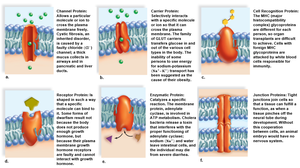
Protein Type | Main Function |
|---|---|
Channel Proteins | Allow specific molecules or ions to cross the membrane via a channel. |
Carrier Proteins | Bind and transport substances across the membrane, often changing shape. |
Cell Recognition Proteins | Glycoproteins that help the body recognize foreign cells. |
Receptor Proteins | Bind signaling molecules and trigger cellular responses. |
Enzymatic Proteins | Catalyze specific reactions at the membrane surface. |
Junction Proteins | Form intercellular junctions for cell-to-cell adhesion and communication. |
Medical Importance of Membrane Proteins
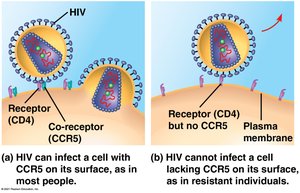
Membrane proteins are crucial in health and disease. For example, the presence or absence of specific receptors can determine susceptibility to infections such as HIV.
HIV infects cells with both CD4 and CCR5 receptors; individuals lacking CCR5 are resistant to infection.
Cellular Communication
Signaling and Receptors
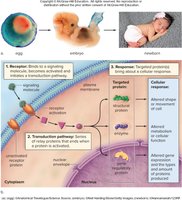
Cells communicate using signaling molecules that bind to specific receptors on the cell membrane, initiating a cascade of events leading to a cellular response.
Example: Insulin released by the pancreas binds to liver cell receptors, triggering glucose storage as glycogen. Failure in this pathway can result in diabetes.
Membrane Permeability and Transport Mechanisms
Selective Permeability
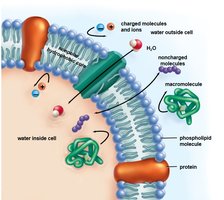
The cell membrane is selectively permeable, allowing some substances to cross more easily than others.
Small, nonpolar molecules (e.g., O2, CO2, alcohols) diffuse freely.
Polar molecules, ions, and macromolecules require protein assistance.
Water can diffuse directly or via aquaporins (water channels).
Some molecules move against their concentration gradient, requiring energy (ATP).
Types of Transport Across the Membrane
Passive Transport: Does not require energy; includes diffusion, osmosis, and facilitated diffusion.
Active Transport: Requires energy (ATP) to move substances against their concentration gradient.
Bulk Transport: Movement of large molecules via vesicles (endocytosis and exocytosis).
Diffusion
Diffusion is the net movement of molecules from an area of higher concentration to an area of lower concentration, driven by the concentration gradient.
Equilibrium is reached when net movement stops and concentrations are uniform.
Factors affecting diffusion rate: temperature, pressure, electrical currents, molecular size.
Example: Gas exchange in the lungs relies on diffusion.
Osmosis
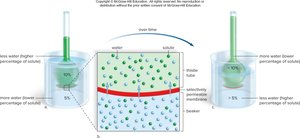
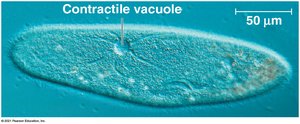
Osmosis is the diffusion of water across a selectively permeable membrane. Water moves toward the side with higher solute concentration (lower water concentration).
Osmotic pressure: The pressure that develops due to osmosis.
Types of Solutions and Their Effects on Cells
Isotonic: Equal solute and water concentrations; no net water movement.
Hypotonic: Lower solute concentration outside the cell; water enters, causing swelling or lysis in animal cells, turgor pressure in plants.
Hypertonic: Higher solute concentration outside the cell; water leaves, causing cell shrinkage (crenation in animals, plasmolysis in plants).
Facilitated Transport
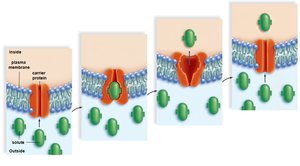
Facilitated transport involves the movement of substances across the membrane with the help of transport proteins, following the concentration gradient and not requiring energy.
Examples: Transport of glucose, amino acids, and ions.
Active Transport
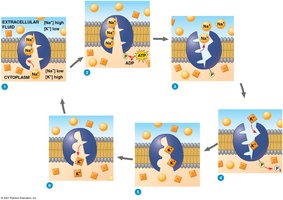
Active transport moves molecules against their concentration gradient, requiring energy (ATP) and specific carrier proteins.
Example: The sodium-potassium (Na+/K+) pump moves Na+ out and K+ into the cell, maintaining electrochemical gradients.
Proton Pumps
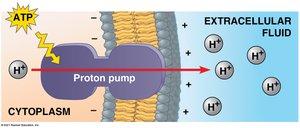
Proton pumps actively transport H+ ions out of the cell, creating an electrochemical gradient used for cellular work such as ATP synthesis.
Bulk Transport
Bulk transport involves the movement of large molecules or particles via vesicles. It includes exocytosis and endocytosis.
Exocytosis: Vesicles fuse with the plasma membrane to release contents outside the cell (e.g., secretion of insulin, plant cell wall synthesis).
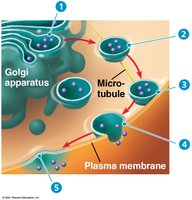
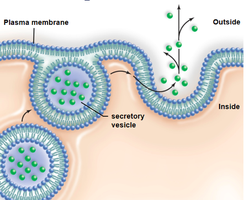
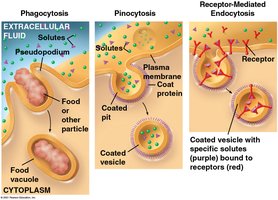
Endocytosis: The cell engulfs substances into a vesicle. Types include:
Phagocytosis: Engulfing large particles (e.g., white blood cells engulfing pathogens).
Pinocytosis: Engulfing liquids or small particles (cell drinking).
Receptor-mediated endocytosis: Specific uptake using receptor proteins (e.g., cholesterol absorption).
Cell Surface Modifications and Intercellular Junctions
Extracellular Matrix (ECM) in Animal Cells
The extracellular matrix is a network of proteins and polysaccharides that provides structural and biochemical support to surrounding cells.
Collagen: Provides tensile strength and resists stretching.
Elastin: Provides elasticity and resilience.
Fibronectin: Binds to integrins, facilitating cell adhesion and signaling.
Proteoglycans: Resist compression and regulate passage of materials.
Junctions in Animal Cells
Specialized junctions connect animal cells, allowing for communication and coordinated function.
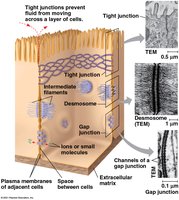
Desmosomes (Adhesion Junctions): Provide strong adhesion between cells in tissues that experience stretching (e.g., heart, skin).
Tight Junctions: Create a seal between adjacent cells, preventing leakage (e.g., intestines, kidneys).
Gap Junctions: Channels that allow ions and small molecules to pass between cells, important for electrical signaling in heart and smooth muscle.
Plasmodesmata in Plant Cells
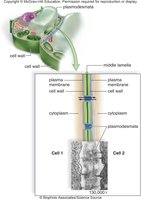
Plant cells are connected by plasmodesmata, channels that traverse the cell wall and allow the movement of water, nutrients, and signaling molecules between cells.
Enable communication and transport throughout plant tissues.