 Back
BackEnergy Balance and Weight Management: Key Concepts and Applications
Study Guide - Smart Notes
 Tailored notes based on your materials, expanded with key definitions, examples, and context.
Energy Balance and Weight Management
Introduction to Energy Balance
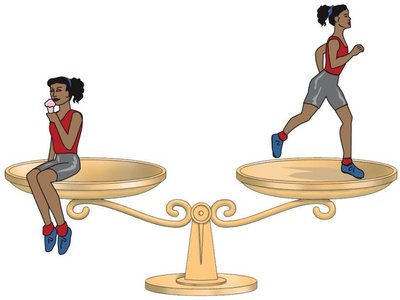
Energy balance is a fundamental concept in nutrition, referring to the relationship between the energy consumed through food and beverages and the energy expended by the body for various physiological processes and activities. Maintaining energy balance is crucial for sustaining a healthy body weight and preventing chronic diseases.
Energy In: The calories taken in from food and beverages, primarily from carbohydrates, lipids, proteins, and alcohol.
Energy Out: The calories expended through basal metabolism, physical activity, thermic effect of food, and other physiological processes.
Energy Balance: Achieved when energy intake equals energy expenditure, resulting in stable body weight.
The Obesity Epidemic
Obesity rates have risen dramatically in Canada and globally, with significant health implications. Over one-third of Canadian adults are overweight, and nearly one-third are obese. Childhood obesity is also a growing concern.
Prevalence: 35.5% of adults overweight, 30% obese, and 27% of children/adolescents overweight or obese in Canada.
Health Risks: Increased risk of cardiovascular disease, type 2 diabetes, respiratory problems, gallbladder disease, osteoarthritis, menstrual irregularities, and certain cancers.
Components of Energy Expenditure
Total Energy Expenditure (TEE)
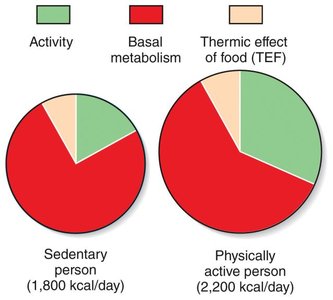
Total energy expenditure is the sum of all calories used by the body in a day. It includes several components:
Basal Energy Expenditure (BEE): Energy expended to maintain basic physiological functions at rest (e.g., breathing, circulation).
Basal Metabolic Rate (BMR): The rate of energy expenditure under resting conditions, typically measured after 5-6 hours without food or exercise.
Resting Energy Expenditure (REE): An estimate of basal metabolism measured after a period of rest and fasting.
Physical Activity: Energy used for movement and exercise.
Thermic Effect of Food (TEF): Energy required for digestion, absorption, metabolism, and storage of nutrients (about 10% of daily energy intake).
Nonexercise Activity Thermogenesis (NEAT): Energy expended for activities other than sleeping, eating, or sports-like exercise.
Stored Energy in the Body
The body stores energy in various forms to be used when dietary intake is insufficient. The main storage sites and their approximate energy content in a 70-kg male are:
Energy Source | Primary Location | Energy (kcal) |
|---|---|---|
Glycogen | Liver and muscle | 1,400 |
Glucose or free fatty acid | Body fluids | 100 |
Triglyceride | Adipose tissue | 115,000 |
Protein | Muscle | 25,000 |
Body Fat, Disease Risk, and Assessment
Excess Body Fat and Disease Risk
Carrying excess body fat increases the risk of numerous diseases and health conditions:
Cardiovascular Disease: Higher blood pressure, triglycerides, LDL cholesterol; lower HDL cholesterol.
Type 2 Diabetes: 85% of people with type 2 diabetes are obese; risk increases with BMI.
Respiratory Problems: Increased risk of sleep apnea, asthma, and breathing difficulties.
Other Risks: Gallbladder disease, osteoarthritis, menstrual irregularities, and increased cancer risk (e.g., endometrial, breast, colorectal).
BMI (Body Mass Index)
BMI is a widely used tool to assess body weight relative to height and categorize weight status:
Formula:
Categories:
Underweight: < 18.5 kg/m2
Healthy: 18.5–24.9 kg/m2
Overweight: 25–29.9 kg/m2
Obese Class 1: 30–34.9 kg/m2
Obese Class 2: 35–39.9 kg/m2
Obese Class 3: > 39.9 kg/m2
Location of Body Fat
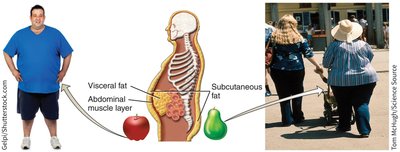
The distribution of body fat is an important determinant of health risk. Visceral fat (around abdominal organs) is more strongly associated with disease risk than subcutaneous fat (under the skin).
Waist Circumference: Used to estimate visceral fat risk.
High risk: > 102 cm (men), > 88 cm (women)
Health Risks: Increased visceral fat is linked to higher rates of heart disease, hypertension, stroke, and diabetes.
Regulation of Energy Balance
Physiological Regulation
The body regulates energy intake and expenditure through complex physiological mechanisms:
Hunger: Internal signals that stimulate the desire to eat.
Satiation: The feeling of fullness that ends a meal.
Satiety: The feeling of fullness that determines the interval between meals.
Ghrelin: A hormone produced by the stomach that stimulates appetite.
Genetic and Biological Factors
Set-Point Theory: Suggests that body weight is regulated at a predetermined, stable level by biological mechanisms.
Obesity Genes: Influence food intake, energy expenditure, and fat storage. Some genes regulate short-term intake (meal to meal), others long-term fat stores.
Thrifty Metabolism: Some individuals inherit a metabolism that is highly efficient at storing energy.
Adaptive Thermogenesis: Changes in energy expenditure in response to environmental or dietary changes.
Futile Cycling: Simultaneous occurrence of opposing metabolic reactions, wasting energy (e.g., in brown adipose tissue).
Other Factors: Hormone imbalances, gut microflora, and developmental exposures (e.g., in utero) can influence energy balance and obesity risk.
Lifestyle, Environment, and Obesity
Obesogenic Environment
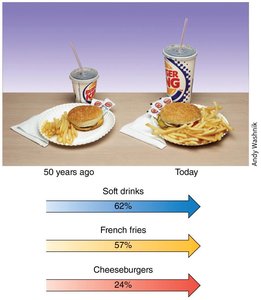
An obesogenic environment promotes weight gain by encouraging overeating and physical inactivity. Factors include easy access to high-calorie foods and reduced opportunities for physical activity.
Appetite: The psychological desire for specific foods, independent of physiological hunger.
Lifestyle: Increased food intake and decreased physical activity contribute to rising obesity rates.
Weight Cycling and Stigma
Weight Cycling
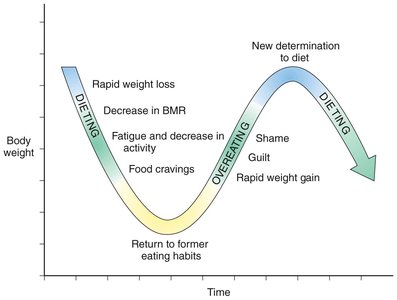
Weight cycling, or "yo-yo dieting," refers to repeated cycles of weight loss and regain. This pattern can have negative physical and psychological effects.
Cycle: Dieting leads to rapid weight loss, decreased basal metabolic rate (BMR), fatigue, and food cravings, often resulting in a return to previous eating habits and rapid weight regain.
Emotional Impact: Feelings of shame and guilt are common, leading to renewed attempts to diet.
Weight Stigma and Support
Weight is influenced by many factors beyond simple calorie balance, including genetics, hormones, and psychological health. Weight does not determine a person's worth or overall health. Professional support can help address the complex factors involved in weight management.
Holistic Approach: Consider psychological, hormonal, and lifestyle factors in weight management.
Professional Guidance: Seek help from trained professionals who focus on overall health, not just the number on the scale.
