 Back
BackEvaluating Nutrition Information: Media, Research, and Industry Influence
Study Guide - Smart Notes
 Tailored notes based on your materials, expanded with key definitions, examples, and context.
Evaluating Website and Media Sources of Nutrition Information
Introduction
Nutrition students must be able to critically evaluate the quality and reliability of information found online and in the media. This section outlines the ABCD method for evaluating sources, discusses the influence of industry funding, and provides guidance on identifying credible nutrition experts and organizations.
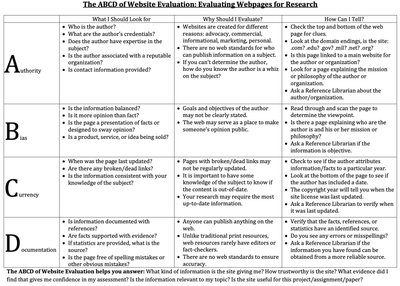
ABCDs of Website Evaluation
The ABCD framework helps students systematically assess the credibility of nutrition information found on websites and in media reports.
Criteria | What to Look For | Why Evaluate? | How to Tell? |
|---|---|---|---|
Authority | Who is the author? Credentials? Expertise? Association with reputable organizations? Contact info? | Websites are created for different reasons (advocacy, commercial, informational, marketing, personal). No web standards for who can publish. If you can't determine the author, how do you know the info is reliable? | Check top/bottom of page for author/organization. Look for domain endings (.edu, .gov, .org). Find mission/philosophy page. Ask a librarian if unsure. |
Bias | Is the information balanced? Is it more opinion than fact? Is it selling a product/service/idea? | Author's goals/objectives may not be clear. The web is a place to make opinions public. | Read through the page for viewpoint. Is there a page explaining who the author is or their mission? Ask a librarian if objective. |
Currency | When was the page last updated? Are there broken links? Is the info consistent with your knowledge? | Broken/outdated links may mean info is not current. Up-to-date info is crucial for research. | Check for dates, copyright year, or last update. Ask a librarian to verify. |
Documentation | Are facts supported with evidence? Are statistics sourced? Is the page free of errors? | Anyone can publish online. Web rarely has editors or fact-checkers. No web standards for accuracy. | Verify facts/references/statistics. Check for errors. Ask a librarian if info can be found from a more reliable source. |
Evaluating Media Reports and Research Studies
Key Questions for Media Reports
Who is reporting the information? Is it a reputable news outlet or a commercial source?
Is the report based on reputable research studies? Peer-reviewed studies are more reliable than testimonials or anecdotal evidence.
Are the claims too good to be true? Extraordinary claims require extraordinary evidence.
Quackery: The promotion of unproven products/services, often for financial gain by unqualified individuals.
Conflict of Interest in Nutrition Research
Industry funding can introduce bias into nutrition research. It is important to consider who funded the study, whether the researchers have financial ties to the sponsor, and if the study design or interpretation may be influenced by these relationships.
Who conducted and paid for the study?
Did the researchers receive compensation or perks?
Do the researchers have investments or ties to related companies?


Examples of Industry Influence
Studies funded by food companies are more likely to report results favorable to the sponsor.
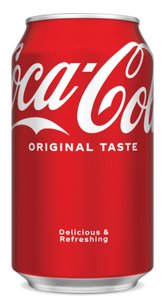
Meta-analyses show that soda industry-funded studies are more likely to downplay the link between soda and obesity.
Single food studies (e.g., blueberries, pistachios, cinnamon, almonds) are often industry-funded and may exaggerate benefits.
Evaluating Dietary Supplement Claims
Key Questions
What is in the supplement?
How does it work?
What evidence supports the claims?
What is the strength of the evidence?
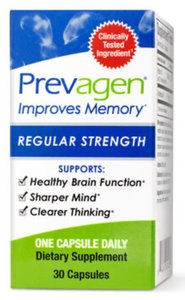

Assessing Supplement Evidence
Look for clinical trials published in peer-reviewed journals.
Be wary of testimonials and anecdotal evidence.
Check for independent replication of results.
How to Find Reliable Nutrition Information
Credible Sources
US Government websites (e.g., CDC, FDA, NIH, Nutrition.gov)
International organizations (e.g., WHO, FAO)
Professional and educational organizations (e.g., Academy of Nutrition and Dietetics, American Heart Association, Harvard School of Public Health)
Identifying Nutrition Experts
Registered Dietitian (RD or RDN): Requires a bachelor's or master's degree, supervised practice, and passing a national exam.
Nutrition and Dietetics Technician, Registered (NDTR): Requires an associate's degree and supervised practice.
Other credentials: MS or Ph.D. in Nutrition, MD with nutrition emphasis.
Be skeptical of the title "nutritionist" as it is not regulated in many places.
Challenges in Nutrition Research
Nutrition research is complex due to the variability in diets and the difficulty of measuring long-term intake.
Observational studies show correlation, not causation.
Randomized controlled trials are rare and often short-term.
Industry funding can bias research questions, design, and reporting.
One study is rarely enough to draw firm conclusions.
Summary Table: Examples of Problematic Conflicts of Interest
Study Example | Funding Source | Potential Conflict? |
|---|---|---|
Blueberries and inflammation | National Blueberry Council | Yes |
Processed foods and calorie intake | National Institutes of Health | No |
Soda and weight gain (blames inactivity, not soda) | Coca-Cola | Yes |
Conclusion
Critical evaluation of nutrition information is essential for students and professionals. Use the ABCD method, be aware of industry influence, and rely on reputable sources and credentialed experts for guidance.
