 Back
BackGuidelines for Healthy Eating: Tools, Reference Intakes, and Lifestyle Factors
Study Guide - Smart Notes
 Tailored notes based on your materials, expanded with key definitions, examples, and context.
Guidelines for Healthy Eating
Food Quality and Nutrient Density
Food quality is a central concept in nutrition, referring to the nutritional value of foods based on their nutrient density. Nutrient-dense foods provide substantial amounts of vitamins, minerals, protein, healthy fats, and fiber, while being low in salt, sugar, and unhealthy fats. Consuming nutrient-dense foods is essential for meeting the body's requirements for approximately forty different nutrients necessary for health, healing, and growth.
Nutrient Density: The ratio of nutrient content to energy content in a food.
High-Quality Foods: Examples include vegetables, fruits, whole grains, legumes, lean meats, fish, and low-fat dairy.
Empty-Calorie Foods: Foods like soft drinks, chips, candy, and cookies provide energy but few nutrients.
Processed Foods: Highly processed foods often lose nutrients during manufacturing.
Example: Whole grains versus refined grains; whole grains retain fiber and micronutrients lost in processing.
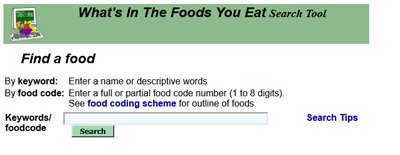
Additional info: The USDA's "What's In The Foods You Eat" search tool allows users to look up the nutrient content of various foods, supporting informed dietary choices.
Food vs. Supplements
Obtaining micronutrients from food is preferable to supplements, as foods contain a complex array of nutrients and beneficial compounds such as antioxidants. While supplements are widely used, evidence does not consistently show they are superior to food for health promotion and disease prevention.
Supplements: May be useful for specific deficiencies but lack the full spectrum of nutrients found in whole foods.
Antioxidants: Compounds in foods that help protect cells from damage.
Dietary Reference Intakes (DRIs)
Overview and Uses
Dietary Reference Intakes (DRIs) are a set of reference values developed by the Food and Nutrition Board of the National Academies. They provide guidelines for nutrient and energy intake for healthy individuals, and are used by individuals, professionals, manufacturers, and government programs.
DRIs: Include recommendations for vitamins, minerals, macronutrients, and energy.
Applications: Used for dietary planning, food labeling, and public health programs.
Six Types of DRIs
The DRIs consist of six reference values:
Estimated Average Requirement (EAR): The intake level that meets the needs of 50% of individuals in a group.
Recommended Dietary Allowance (RDA): The intake level that meets the needs of 97-98% of individuals.
Adequate Intake (AI): Used when there is insufficient evidence to establish an EAR; based on observed or experimentally determined estimates.
Tolerable Upper Intake Level (UL): The maximum daily intake unlikely to cause adverse health effects.
Acceptable Macronutrient Distribution Range (AMDR): The recommended percentage of energy from carbohydrates, fats, and proteins.
Estimated Energy Requirement (EER): The average dietary energy intake predicted to maintain energy balance.
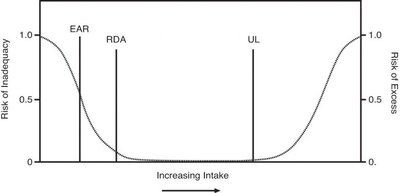
Additional info: The graph visually demonstrates the relationship between nutrient intake and risk: low intake increases risk of deficiency, while intake above the UL increases risk of toxicity. Most individuals should aim for intake between the RDA and UL.
Acceptable Macronutrient Distribution Ranges (AMDR)
AMDRs specify the recommended proportion of daily energy intake from macronutrients for different age groups:
Age Group | Protein (%) | Carbohydrates (%) | Fat (%) |
|---|---|---|---|
Children (1–3) | 5–20 | 45–65 | 30–40 |
Children and Adolescents (4–18) | 10–30 | 45–65 | 25–35 |
Adults (>19) | 10–35 | 45–65 | 20–35 |
Estimated Energy Requirement (EER)
EER is the recommended daily energy intake (in kcals) to maintain energy balance, varying by age, sex, weight, height, and physical activity level.
Formula: EER calculations use predictive equations based on demographic and lifestyle factors.
Lifestyle Factors and Nutrition
Physical Activity
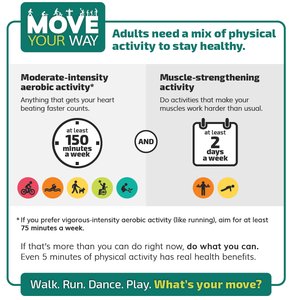
Physical activity is a key component of a healthy lifestyle, reducing the risk of chronic diseases and improving overall well-being. The Physical Activity Guidelines recommend a mix of moderate aerobic activity and muscle-strengthening exercises.
Moderate Aerobic Activity: At least 150 minutes per week.
Muscle-Strengthening Activity: At least 2 days per week.
Benefits: Reduced risk of heart disease, diabetes, stroke, and improved cognitive function.
Recreational Drug Use
Recreational drug use, including tobacco, alcohol, and illicit drugs, negatively impacts health and nutrition. Smoking increases the need for vitamin C, while excessive alcohol consumption can lead to malnutrition and increased risk of chronic diseases.
Smoking: Causes multiple cancers and heart disease; increases vitamin C requirements.
Alcohol: Excessive intake increases risk of liver disease, stroke, and malnutrition; moderate intake may reduce risk of heart disease in some individuals.
Drug Abuse: Associated with increased risk of stroke, heart disease, cancer, and other health issues.
Sleeping Patterns
Diet influences sleep quality and duration. Poor sleep is linked to increased caloric intake, irregular eating patterns, and weight gain. Hormonal changes due to inadequate sleep affect appetite regulation and metabolism.
Food and Culture
Cultural, economic, and social factors shape food choices and eating patterns. Traditions, religious practices, geography, advertising, and social influences all play a role in dietary decisions.
Cultural Traditions: Examples include kosher foods, fasting during Ramadan, and special holiday foods.
Economic Factors: Access to healthy foods may be limited in disadvantaged areas.
Social and Emotional Factors: Peer pressure, habits, and emotions influence eating behavior.
Sustainability: Increasing awareness of environmental impact leads to choices such as vegetarianism and local, organic foods.
Types of Vegetarian Diets
Lacto-ovo vegetarian: Includes eggs and dairy.
Lacto-vegetarian: Includes dairy but not eggs.
Ovo-vegetarian: Includes eggs but not dairy.
Vegan: Excludes all animal products.
Characteristics of a Healthy Diet
A healthful diet is defined by five key characteristics:
Adequacy: Sufficient energy and nutrients.
Nutrient Balance: Appropriate amounts of all nutrients.
Energy Balance: Caloric intake matches energy expenditure.
Moderation: Avoiding excess and deficiency.
Variety: Consuming diverse foods to meet nutrient needs and minimize exposure to contaminants.
Themes of the 2020 Dietary Guidelines
Healthy Eating Patterns
The Dietary Guidelines recommend consuming a variety of vegetables, fruits, whole grains, low-fat dairy, and protein foods, while limiting saturated fats, trans fats, added sugars, and sodium.
Foods to Increase: Vegetables, fruits, whole grains, high-calcium foods.
Foods to Limit: Saturated fats, trans fats, added sugars, sodium, and cholesterol.
Alcohol: If consumed, should be in moderation (up to one drink per day for women, two for men).
Practical Substitutions for Healthier Diets
Instead of... | Replace with... |
|---|---|
Sweetened fruit yogurt | Plain fat-free yogurt with fresh fruit |
Whole milk | Low-fat or fat-free milk |
Cheese | Low-fat or reduced-fat cheese |
Bacon or sausage | Canadian bacon or lean ham |
Sweetened cereals | Minimally sweetened cereals with fresh fruit |
Apple or berry pie | Fresh apple or berries |
Deep-fried French fries | Oven-baked or sweet potato baked fries |
Fried vegetables | Steamed or roasted vegetables |
Sugary sweetened soft drinks | Seltzer mixed with 100% fruit juice |
Recipes that call for sugar | Reduce sugar and add spices (cinnamon, nutmeg, etc.) |
Additional info: These substitutions help reduce intake of added sugars, saturated fats, and sodium, supporting overall health.
