 Back
Hunger at Home and Abroad: Food Insecurity, Malnutrition, and Strategies for Improvement
Study Guide - Smart Notes
 Tailored notes based on your materials, expanded with key definitions, examples, and context.
Hunger at Home and Abroad
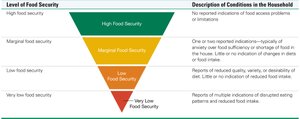
Food Insecurity, Food Security, and Hunger
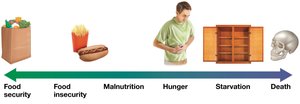
Food security and food insecurity are critical concepts in nutrition, describing the availability and access to sufficient, nutritious food for all individuals. Hunger is a physiological condition resulting from food insecurity, and prolonged hunger can lead to starvation and severe health consequences.
Food Security: A household is food secure if it has access at all times to enough food for an active, healthy life for all members.
Food Insecurity: Occurs when any household member lacks resources to obtain adequate nutritious food.
Hunger: An individual-level physiological condition that may result from food insecurity.
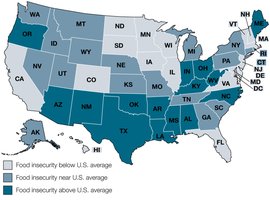
Extent: In 2016, 12.3% of American households were food insecure; globally, 815 million people were chronically undernourished.
Classification of Countries by Development
Countries are classified based on their industrial capability, technological sophistication, and economic productivity, which affects their risk for food insecurity.
Developed Countries: Advanced in industry and technology (e.g., U.S., Canada, Australia).
Developing Countries: Less advanced (e.g., Brazil, China, India).
Least Developed Countries: Poorest nations, often in Africa.
Causes of Food Insecurity in the United States
Food insecurity in the U.S. is primarily driven by poverty, but other factors such as employment status, health, and local food environments also play significant roles.
Poverty: Families below the poverty line ($24,339 for a family of four) are at high risk.
Demographics: Higher rates among single-woman households, Black and Hispanic households.
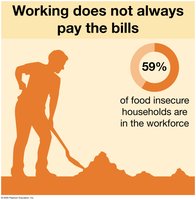
Employment: Steady employment does not guarantee food security; 59% of food-insecure households are in the workforce.
Food Deserts: Areas lacking supermarkets within 1.4 miles, limiting access to nutritious food.
Food Swamps: Areas with high density of fast food and junk food outlets.
Health Problems: Chronic illness, disability, substance abuse, and mental illness contribute to food insecurity.
Causes of Food Insecurity Worldwide
Globally, food insecurity is influenced by discrimination, political instability, natural disasters, and population growth.
Discrimination and Inequality: Limits employment, education, and business opportunities for vulnerable groups.
Political Sanctions and Armed Conflict: Disrupt food supply and divert resources from nutrition programs.
Natural Disasters and Agricultural Practices: Drought, crop failure, and unsustainable farming threaten food availability.
Population Overgrowth: Increasing global population strains food production.
Populations at Highest Risk for Undernutrition
Certain groups are more vulnerable to undernutrition due to physiological needs or social circumstances.
Pregnant and Lactating Women
Infants and Children
The Critically Ill
Older Adults
Effects of Chronic Malnutrition
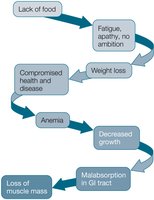
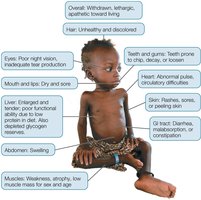
Chronic malnutrition leads to severe health consequences, including impaired growth, weakened immunity, and increased mortality. Recovery is difficult once malnutrition and hunger set in.
Physical Effects: Breakdown of fat, muscle, and organs; adults may lose up to 50% of body weight.
Children: Stunting (permanent impaired growth), wasting (acute malnutrition), and developmental delays.
Immunity: Increased susceptibility to diseases (e.g., pneumonia, malaria, diarrhea).
Micronutrient Deficiencies: "Hidden hunger"—deficiencies in vitamin A, iron, and iodine cause blindness, anemia, and cretinism.
Mortality: Higher infant and child mortality; malnutrition can be passed to future generations.
Strategies to Reduce Food Insecurity
Multiple strategies are employed to combat food insecurity, including local aid, government programs, improved land management, food fortification, sanitation, and education.
Local and Government Aid: Food assistance programs, community relief agencies, and economic opportunities.
Land Management and Sanitation: Proper land use and access to safe water are essential for food security.
Food Fortification: Adding micronutrients to foods helps alleviate deficiencies.
Education: Societies with higher education levels have better resource management, health, and productivity.
Individual Action: Donations, volunteering, and supporting local food banks.
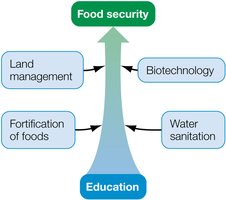
Additional info: Education is a foundational strategy, as it enables better resource management, technological innovation, and improved health outcomes, all of which contribute to food security.
