 Back
BackLipids: Structure, Function, and Health Implications
Study Guide - Smart Notes
 Tailored notes based on your materials, expanded with key definitions, examples, and context.
Lipids
Definition and Types
Lipids are a diverse group of organic compounds that are insoluble in water but soluble in organic solvents. They serve as a major source of energy and are essential components of cell membranes. The main classes of lipids include fatty acids, triglycerides, phospholipids, and sterols.
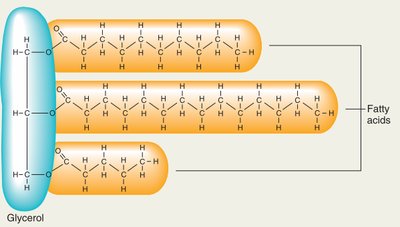
Fatty acids: Building blocks of many lipids.
Triglycerides: The most common form of fat in food and the body, composed of three fatty acids attached to a glycerol backbone.
Phospholipids: Key components of cell membranes, containing a phosphate group.
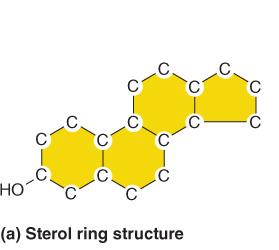
Sterols: Lipids with a ring structure, such as cholesterol.
Dietary Sources of Lipids
Animal and Plant Sources
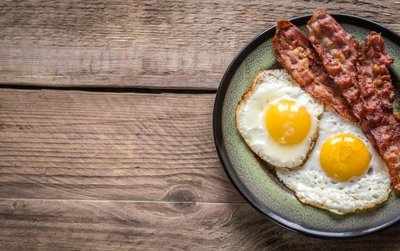
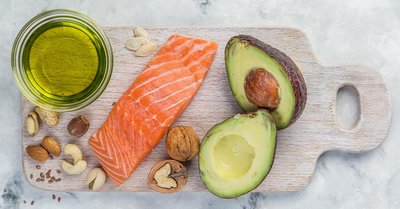
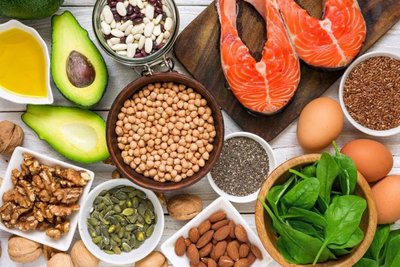
Lipids are found in both animal and plant foods. Animal sources include meat, cheese, and dairy products, which are typically higher in saturated fats. Plant sources include vegetable oils, nuts, avocados, and coconut, which are often higher in unsaturated fats.
Hidden fats are present in processed foods such as crackers, cookies, muffins, and fancy drinks.
Structure and Classification of Fatty Acids
Chemical Structure
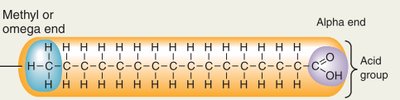
Fatty acids are chains of carbon atoms with hydrogen atoms attached. They vary in chain length and degree of saturation, which affects their physical properties and roles in the body.
Short-chain fatty acids: Fewer than 6 carbons
Medium-chain fatty acids: 6–10 carbons
Long-chain fatty acids: More than 12 carbons
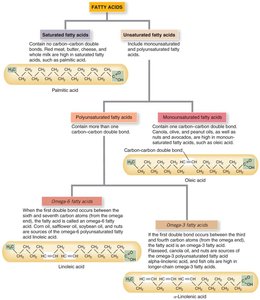
Saturated vs. Unsaturated Fatty Acids
Fatty acids are classified based on the presence or absence of double bonds:
Saturated fatty acids: No double bonds; solid at room temperature; found in butter, lard, and animal fats.
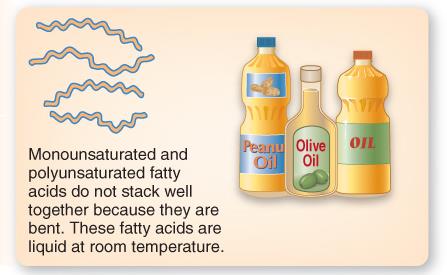
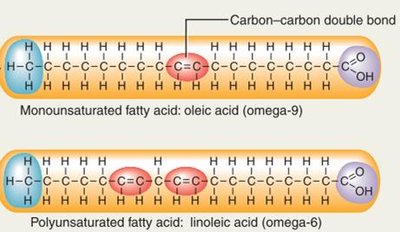
Unsaturated fatty acids: One or more double bonds; liquid at room temperature; found in plant oils and seafood.
Essential Fatty Acids
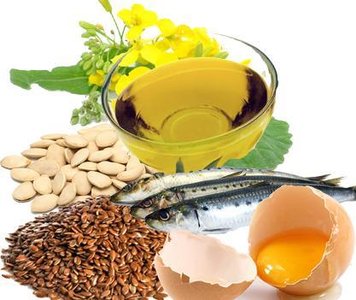
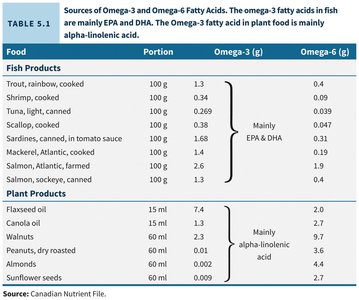
The body cannot synthesize two polyunsaturated fatty acids, making them essential in the diet:
Linoleic acid (omega-6)
Alpha-linolenic acid (omega-3)
These are used to produce eicosanoids, which are regulatory molecules involved in inflammation and other functions.
Cis and Trans Fatty Acids
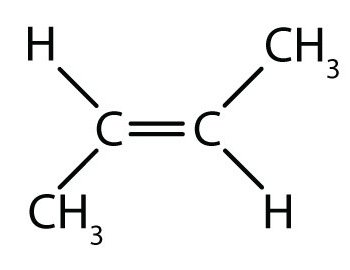
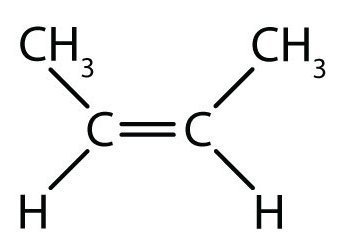
Unsaturated fatty acids can have hydrogen atoms on the same side (cis) or opposite sides (trans) of the double bond.
Cis configuration: Naturally occurring, bends the molecule.
Trans configuration: Produced during hydrogenation, straightens the molecule, associated with increased cardiovascular risk.
Phospholipids
Structure and Function
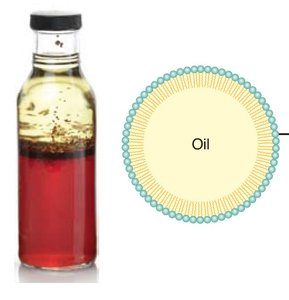
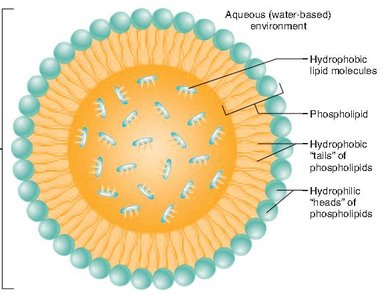
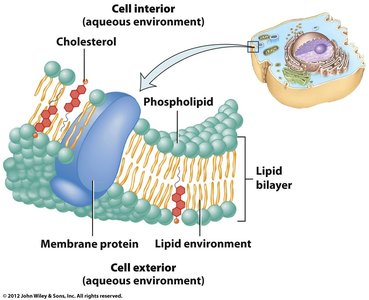
Phospholipids consist of a glycerol backbone, two fatty acids, and a phosphate group. They are essential for cell membrane structure and function as emulsifiers, allowing fats to be transported in the blood.
Lipid bilayer: Forms the structural basis of cell membranes, controlling entry and exit of substances.
Sterols
Cholesterol and Plant Sterols
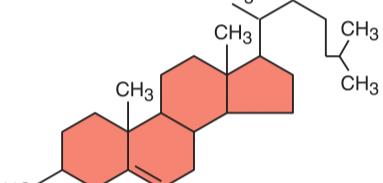
Sterols are lipids with a characteristic ring structure. Cholesterol is the most well-known sterol in animals, while phytosterols are found in plants.
Cholesterol: Essential for cell membranes, precursor for vitamin D, bile acids, and steroid hormones.
Phytosterols: Help form plant cell membranes and may lower cholesterol absorption in humans.
Lipoproteins
Types and Functions
Lipoproteins are complexes that transport water-insoluble lipids in the blood. They are classified by density:
Lipoprotein | Main Component | Function |
|---|---|---|
Chylomicron | Triglycerides | Transports dietary lipids from intestine to tissues |
VLDL | Triglycerides | Transports lipids made in the liver to tissues |
LDL | Cholesterol | Delivers cholesterol to tissues; "bad cholesterol" |
HDL | Protein | Returns cholesterol to liver; "good cholesterol" |
Functions of Lipids in the Body
Physiological Roles
Lipids serve several critical functions in the body:
Energy storage and production
Protection of vital organs
Insulation
Transport and storage of fat-soluble vitamins (A, D, E, K)
Essential fatty acids for growth, skin integrity, and fertility
Cholesterol as a precursor for hormones and vitamin D
Lipid Digestion and Metabolism
Digestion Process
Lipid digestion begins in the mouth and stomach but primarily occurs in the small intestine, where bile and pancreatic enzymes break down triglycerides into fatty acids and monoglycerides for absorption.
Lingual and gastric lipase: Start fat digestion in the mouth and stomach.
Bile: Emulsifies fats in the small intestine.
Pancreatic lipase: Completes fat digestion.
Lipids and Health
Cardiovascular Disease
High intake of saturated and trans fats increases the risk of atherosclerosis and heart disease. Unsaturated fats, especially omega-3 fatty acids, are protective.
Risk factors: High LDL, low HDL, high total cholesterol, diabetes, hypertension, obesity, smoking, sedentary lifestyle, poor diet.
Protective factors: High fiber, fish, nuts, whole grains, fruits, and vegetables.
Dietary Recommendations
20–35% of total calories from fat
Limit saturated and trans fat intake
Emphasize unsaturated fats, especially omega-3 and omega-6 fatty acids
Calculating Percent of Energy from Fat
To determine the percent of energy from fat in the diet:
Fat provides 9 kcal/g
Multiply grams of fat by 9 to get kcal from fat
Divide kcal from fat by total kcal and multiply by 100
For example, a diet with 2,000 kcal and 75 g fat:
kcal from fat of energy from fat
Food Label Claims
Claim | Definition |
|---|---|
Fat-free | Less than 0.5 g fat per serving |
Low-fat | 3 g or less fat per serving |
Reduced fat | At least 25% less fat than reference product |
Cholesterol-free | Less than 2 mg cholesterol and 2 g or less saturated and trans fat per serving |
Source of omega-3 | 0.3 g or more omega-3 per serving |
Good Sources of Fats
Tree nuts
Avocados
Coconut oil
Walnut oil
Flaxseeds and flaxseed oil
Grass-fed beef and dairy
Wild-caught fish
Pasture-raised eggs and poultry
Wild game
Summary Table: Types of Fatty Acids
Type | Structure | Sources | Health Impact |
|---|---|---|---|
Saturated | No double bonds | Animal fats, coconut oil | Increases LDL, risk of CVD |
Monounsaturated | One double bond | Olive oil, nuts, avocado | Decreases LDL, protective |
Polyunsaturated (omega-3, omega-6) | Multiple double bonds | Fish, flaxseed, walnuts | Decreases inflammation, protective |
Trans | Trans double bond | Processed foods, margarine | Increases LDL, risk of CVD |
