 Back
Lipids: Structure, Types, and Functions in Nutrition
Study Guide - Smart Notes
 Tailored notes based on your materials, expanded with key definitions, examples, and context.
Fats: Essential Energy-Supplying Nutrients
Overview of Lipids
Lipids are a diverse class of organic substances that are insoluble in water. In nutrition, the term "fats" refers to both solid and liquid food lipids. Lipids are crucial for energy storage, cell structure, and various physiological functions.
Key Types of Food Lipids: Triglycerides, Phospholipids, Sterols
Physical Forms: Solid (e.g., butter) and liquid (e.g., olive oil) at room temperature
Types of Food Lipids
Triglycerides
Triglycerides are the most common form of fat in the diet and body, accounting for about 95% of dietary fats. They are composed of one glycerol molecule and three fatty acid molecules.
Glycerol: A three-carbon alcohol serving as the backbone
Fatty Acids: Long chains of carbon atoms surrounded by hydrogen atoms
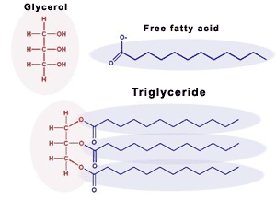
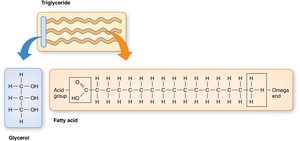
Storage: Triglycerides are the main form of stored fat in animals and humans.
Phospholipids
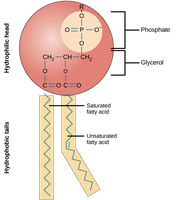
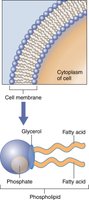
Phospholipids are essential components of cell membranes. They consist of a glycerol backbone, two fatty acids, and a phosphate group. The phosphate head makes them partially soluble in water.
Structure: Glycerol backbone, two fatty acids, phosphate group
Function: Regulate transport of substances into and out of cells
Dietary Requirement: Not required in the diet as they are manufactured in the body
Sterols
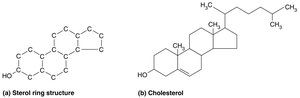
Sterols are lipids with multiple rings of carbon atoms. Cholesterol is the most common sterol, found in animal and plant foods and synthesized in the body. Plant sterols can block cholesterol absorption.
Structure: Multiple carbon rings
Function: Component of cell membranes, precursor for hormones, bile, and vitamin D
Dietary Requirement: Not essential as they are synthesized in the body
Classification of Triglycerides
Fatty Acid Chain Length
Fatty acids are classified by the length of their carbon chain, which affects digestion, absorption, and transport.
Short-chain: <6 carbons
Medium-chain: 6–12 carbons
Long-chain: >13 carbons
Level of Fatty Acid Saturation
Saturation refers to the presence of hydrogen atoms and double bonds in the fatty acid chain.
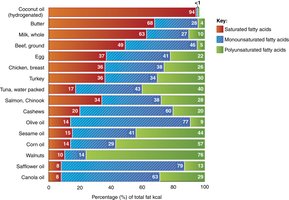
Saturated Fatty Acids: No double bonds; all carbons are surrounded by hydrogen
Monounsaturated Fatty Acids: One double bond; lack hydrogen in one region
Polyunsaturated Fatty Acids: Two or more double bonds; lack hydrogen in multiple regions
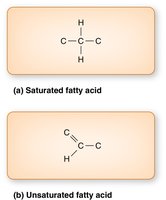
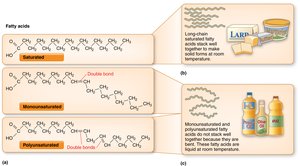
Health Impact: Diets high in saturated fats (animal-based foods) are less healthful than those high in unsaturated fats (plant-based foods).
Fatty Acid Shape: Cis and Trans
The shape of a fatty acid is determined by the arrangement of hydrogen atoms around the double bond.
Cis: Hydrogen atoms on the same side; found in nature and whole foods
Trans: Hydrogen atoms on opposite sides; more rigid, similar to saturated fat
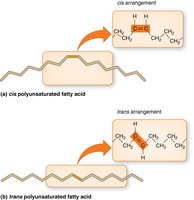
Hydrogenation: The process of adding hydrogen to unsaturated fats, creating trans fats. Trans fats are associated with increased risk of cardiovascular disease (CVD).
Essential Fatty Acids
Omega-6 and Omega-3 Fatty Acids
Essential fatty acids cannot be synthesized by the body and must be obtained from the diet. They are precursors to eicosanoids, which regulate cellular functions such as GI tract motility, blood clotting, and inflammation.
Omega-6: Linoleic acid (found in vegetable and nut oils)
Omega-3: Alpha-linolenic acid (ALA, found in leafy greens, flaxseed, soybeans, walnuts, canola oil), EPA and DHA (found in fish and fish oils)
Health Impact: Unsaturated fatty acids, including essential fatty acids, are protective against CVD, while saturated and trans fats increase risk.
Functions of Fats in the Body
Five Functions of Fats
Fats play several critical roles in human health and nutrition:
Provide Energy: Fats are energy dense, supplying 9 kcal/gram. They are used for energy during rest and exercise, especially after glycogen is depleted.
Transport Fat-Soluble Vitamins: Vitamins A, D, E, and K require fat for absorption and transport.
Maintain Cell Function: Fats are essential for cell membrane structure, nerve transmission, and other cellular functions.
Provide Protection: Adipose tissue cushions organs and insulates the body.
Contribute to Flavor and Texture: Fats enhance the taste and mouthfeel of foods and take longer to digest.
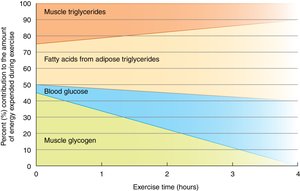
Example: During prolonged exercise, the body increasingly relies on fatty acids from adipose tissue for energy.
Summary Table: Types of Food Lipids
Type | Structure | Function | Dietary Requirement |
|---|---|---|---|
Triglycerides | Glycerol + 3 fatty acids | Energy storage, insulation, protection | Major dietary fat |
Phospholipids | Glycerol + 2 fatty acids + phosphate | Cell membrane structure | Not required (synthesized in body) |
Sterols | Multiple carbon rings | Cell membrane, hormones, bile, vitamin D | Not required (synthesized in body) |
Key Equations
Energy Provided by Fat:
Triglyceride Formation:
Additional info: Academic context was added to clarify the structure, function, and health impact of different types of lipids, as well as the classification and roles of fatty acids in nutrition.
