 Back
BackMinerals in Human Nutrition: Functions, Sources, and Health Implications
Study Guide - Smart Notes
 Tailored notes based on your materials, expanded with key definitions, examples, and context.
Minerals: Essential Inorganic Nutrients
Definition and Importance
Minerals are inorganic elements essential for human nutrition and health. Out of the 92 naturally occurring elements, 14 are required for normal body function. Minerals play critical roles in chemical reactions, immune function, muscle contraction, and maintaining heart rhythm.
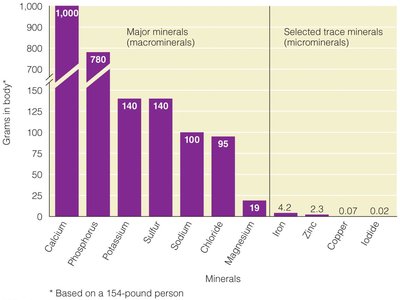
Major minerals (macrominerals): Needed in amounts >100 mg/day; present in the body at >5 g.
Trace minerals (microminerals): Needed in amounts <20 mg/day; present in the body at <5 g.
Classification of Minerals
Major Minerals
Calcium
Sodium
Potassium
Chloride
Phosphorus
Magnesium
Sulfur
Trace Minerals
Iron
Zinc
Copper
Selenium
Chromium
Iodide
Manganese
Molybdenum
Fluoride
Bioavailability of Minerals
Factors Affecting Absorption
Bioavailability refers to the degree to which a nutrient is absorbed and utilized in the body. Several factors influence mineral bioavailability:
Nutritional status: Deficiency increases absorption.
Competing minerals: Excess of one mineral can inhibit absorption of another.
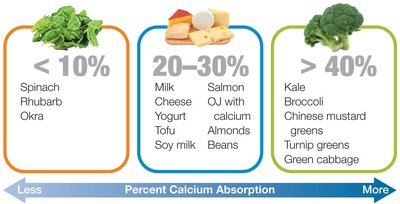
Binders: Phytates, oxalates, and polyphenols reduce absorption.
Enhancers: Vitamin C increases iron absorption; vitamin D increases calcium absorption; animal protein enhances zinc absorption.
Factors Increasing Bioavailability | Factors Reducing Bioavailability |
|---|---|
Deficiency in a mineral | Binders (oxalates, phytates, polyphenols) |
Cooking (legumes) | Supplementation of single minerals |
Vitamin C (iron), Vitamin D (calcium, phosphorus, magnesium) |
Functions of Minerals in the Body
Fluid and electrolyte balance
Blood formation
Bone health
Immune system maintenance
Cofactors for enzymes
Energy metabolism
Structural growth
The body tightly regulates mineral balance through the gastrointestinal tract and kidneys.
Major Minerals: Functions, Sources, and Health Effects
Sodium (Na+)
Function: Major extracellular cation; regulates body water and blood pressure; aids nutrient transport.
Sources: Processed foods, table salt, seaweed.
Excess: Hypertension, edema, osteoporosis risk.
Deficiency: Headache, nausea, fatigue, disorientation.
Chloride (Cl-)
Function: Major extracellular anion; maintains fluid balance; part of HCl in stomach.
Sources: Table salt, processed foods, rye.
Deficiency/Toxicity: Rare except with sodium imbalance.
Potassium (K+)
Function: Major intracellular cation; fluid and pH balance; muscle and nerve function; lowers blood pressure.
Sources: Fruits, vegetables, dairy, nuts, unprocessed foods.
Excess: Heart damage, death (from supplements).
Deficiency: Muscle weakness, cramps, irregular heartbeat, paralysis.
Calcium (Ca2+)
Function: Bone and teeth formation; muscle contraction; nerve transmission; blood clotting.
Sources: Dairy, leafy greens, fortified foods, fish with bones.
Excess: Kidney stones, constipation, impaired absorption of other minerals.
Deficiency: Osteoporosis, bone fractures.
Phosphorus (PO43-)
Function: Bone and teeth formation; part of DNA, RNA, ATP; acid-base balance.
Sources: Meat, fish, eggs, cereals.
Excess/Deficiency: Affects calcium balance, muscle weakness, bone pain.
Magnesium (Mg2+)
Function: Cofactor in 300+ reactions; muscle and nerve function; bone health; blood pressure regulation.
Sources: Green leafy vegetables, whole grains, nuts, legumes, dairy.
Excess: Diarrhea, cramps (from supplements).
Deficiency: Weakness, confusion, irregular heartbeat.
Sulfur (as Sulfate SO42-)
Function: Part of proteins, thiamin, biotin; collagen formation; acid-base balance.
Sources: Protein-containing foods.
Excess/Deficiency: Rare; no established daily needs.
Bone Health and Osteoporosis
Osteoporosis
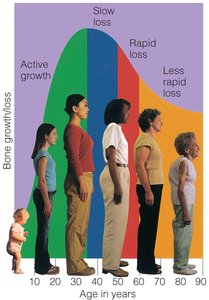
Osteoporosis is a condition of porous, less dense bones, increasing fracture risk. Bone mass peaks in early adulthood and declines with age, especially after menopause.
Prevention: Adequate calcium and vitamin D, weight-bearing exercise, healthy body weight, avoidance of smoking and excessive alcohol.
Trace Minerals: Functions, Sources, and Health Effects
Iron (Fe)
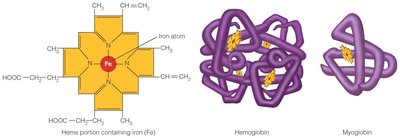
Function: Component of hemoglobin and myoglobin; oxygen transport; energy metabolism; immune function; brain development.
Sources: Heme iron (animal foods), nonheme iron (plant foods).
Excess: Organ damage, GI distress.
Deficiency: Iron-deficiency anemia, fatigue, impaired immunity, cognitive deficits.
Copper (Cu)
Function: Cofactor for enzymes; iron metabolism; antioxidant defense; connective tissue formation.
Sources: Cocoa, whole grains, legumes, shellfish.
Excess: Liver damage.
Deficiency: Anemia, impaired immunity.
Zinc (Zn)
Function: Cofactor for enzymes; DNA/RNA synthesis; immune function; wound healing; taste perception.
Sources: Seafood, meat, whole grains.
Excess: GI distress, impaired immunity.
Deficiency: Growth delay, hair loss, impaired taste, diarrhea.
Selenium (Se)
Function: Antioxidant; thyroid hormone regulation; immune function.
Sources: Meat, seafood, eggs, whole grains.
Excess: Hair/nail brittleness, garlic breath odor.
Deficiency: Muscle weakness, Keshan disease.
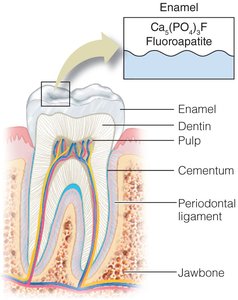
Fluoride (F-)
Function: Strengthens teeth and bones; prevents dental caries.
Sources: Fluoridated water, tea, seaweed.
Excess: Fluorosis.
Deficiency: Increased dental caries.
Chromium (Cr)
Function: Enhances insulin action; may improve blood glucose control.
Sources: Broccoli, pork, egg yolks, whole grains, nuts.
Deficiency: Impaired glucose tolerance.
Iodine (I)
Function: Essential for thyroid hormone synthesis; regulates metabolism and growth.
Sources: Iodized salt, seafood, dairy.
Deficiency: Goiter, cretinism.

Molybdenum (Mo)
Function: Cofactor for enzymes in amino acid metabolism and redox reactions.
Sources: Legumes, grains, nuts, dairy, leafy greens.
Manganese (Mn)
Function: Cofactor for enzymes in carbohydrate, fat, and amino acid metabolism; bone formation; cartilage synthesis.
Sources: Whole grains, nuts, legumes, tea, vegetables, fruits.
Mineral Toxicity
Minerals can be toxic in high amounts, usually from supplements rather than food. Toxicity can cause organ damage, GI symptoms, and interfere with absorption of other nutrients.
Summary Table: Major and Trace Minerals
Mineral | Function | Sources | Deficiency Symptoms | Toxicity Symptoms |
|---|---|---|---|---|
Calcium | Bones, muscle contraction | Dairy, greens | Osteoporosis | Kidney stones |
Iron | Hemoglobin, myoglobin | Meat, legumes | Anemia | Organ damage |
Zinc | Enzyme cofactor, immunity | Meat, grains | Growth delay | GI distress |
Iodine | Thyroid hormone | Iodized salt | Goiter | Thyroid dysfunction |
Fluoride | Teeth, bones | Water, tea | Caries | Fluorosis |
Additional info: This guide covers the essential functions, sources, and health implications of major and trace minerals, as well as factors affecting their bioavailability and toxicity. It is suitable for exam preparation in a college-level nutrition course.
