 Back
BackNutrition Across the Life Cycle: Pregnancy, Infancy, and Lactation
Study Guide - Smart Notes
 Tailored notes based on your materials, expanded with key definitions, examples, and context.
Q1. At what point in the pregnancy process should a woman start eating a healthy, nutritious diet?
Background
Topic: Preconception Nutrition
This question tests your understanding of the importance of nutrition before and during pregnancy, and how early dietary choices can impact both conception and fetal development.
Key Terms and Concepts:
Preconception Nutrition: The nutritional status and dietary habits of a woman before becoming pregnant.
Gestation: The period from conception to birth.
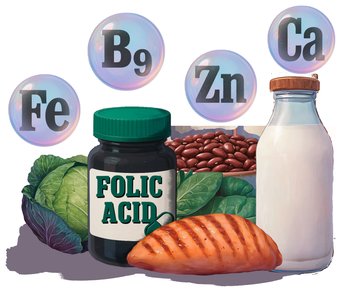
Micronutrients: Essential vitamins and minerals needed in small amounts for proper development (e.g., folic acid, iron).
Step-by-Step Guidance
Consider why a healthy diet is important before conception. Think about how nutrient stores and body weight can affect fertility and early fetal development.
Recall that certain nutrients (like folic acid) are especially critical in the earliest weeks of pregnancy, often before a woman knows she is pregnant.
Think about the recommendations for both women and men regarding healthy body weight, avoidance of teratogens, and adequate micronutrient intake prior to conception.
Try solving on your own before revealing the answer!
Q2. True or false? When a couple is trying to conceive, the man's diet can have an impact on both the likelihood of conception & the health of the pregnancy.
Background
Topic: Preconception Nutrition for Both Parents
This question assesses your understanding of how both partners' health and nutrition can influence conception and pregnancy outcomes.
Key Terms and Concepts:
Sperm Health: Influenced by diet, alcohol, smoking, and overall health.
Conception: The process of becoming pregnant.
Step-by-Step Guidance
Think about how a man's diet and lifestyle can affect sperm quality and count, which are important for conception.
Consider whether the father's nutrition continues to impact the pregnancy after conception, or if the mother's health becomes the primary influence.
Review the answer choices to see which best reflects the scientific understanding of paternal influence on conception and pregnancy health.
Try solving on your own before revealing the answer!
Q3. Christine and her partner are trying to have a child. Her BMI is currently in the overweight range, and she drinks wine every weekend & on some weeknights. She eats a healthy, well-rounded vegetarian diet and does not smoke cigarettes. What should be her priority now that she and her partner are trying to conceive?
Background
Topic: Preconception Health and Lifestyle Modifications
This question tests your ability to identify the most important lifestyle changes for optimizing fertility and pregnancy outcomes.
Key Terms and Concepts:
BMI (Body Mass Index): A measure of body fat based on height and weight.
Alcohol Consumption: Can negatively affect fertility and early pregnancy.
Micronutrient Intake: Ensuring adequate intake of key nutrients (e.g., folic acid, iron).
Step-by-Step Guidance
Identify which of Christine's current habits could negatively impact conception or pregnancy (e.g., BMI, alcohol intake).
Consider which changes would have the greatest positive effect on her chances of a healthy pregnancy.
Review the answer choices and eliminate those that do not address the most important priorities for preconception health.
Try solving on your own before revealing the answer!
Q4. Which of the following meals is most appropriate for a pregnant woman to eat regularly?
Background
Topic: Food Safety and Nutrition During Pregnancy
This question tests your knowledge of foods that should be avoided or limited during pregnancy due to risks such as foodborne illness or high mercury content.
Key Terms and Concepts:
Teratogens: Substances that can cause birth defects (e.g., certain fish, unpasteurized cheeses).
Foodborne Illness: Pregnant women are more susceptible to infections like listeria.
Mercury: High levels in some fish can harm fetal development.
Step-by-Step Guidance
Review each meal option for ingredients that are considered unsafe or should be limited during pregnancy (e.g., certain cheeses, high-mercury fish, herbal teas).
Identify which meal contains only foods that are generally considered safe and nutritious for pregnant women.
Eliminate options with known risks, focusing on balanced meals with lean protein, fruits, and vegetables.
Try solving on your own before revealing the answer!
Q5. Which of the following micronutrients is stored in significant amounts in the fetus during gestation?
Background
Topic: Micronutrient Needs During Pregnancy
This question tests your understanding of which nutrients are transferred from mother to fetus and stored for use after birth.
Key Terms and Concepts:
Iron: Essential for red blood cell production and stored in the fetus for use after birth.
Folic Acid (Vitamin B9): Important for neural tube development but not stored in large amounts in the fetus.
Step-by-Step Guidance
Recall which nutrients are prioritized for storage in the fetus during gestation, especially those needed for rapid growth after birth.
Review the answer choices and consider the physiological roles of each nutrient in fetal development.
Eliminate nutrients that are not typically stored in significant amounts in the fetus.
Try solving on your own before revealing the answer!
Q6. Cara is 8 weeks pregnant and has just begun experiencing morning sickness & unusual food cravings. She has not gained any significant weight since finding out that she was pregnant, and she currently exercises for 3 hours per week on a stationary bike. How should she adjust her routine for an optimal pregnancy?
Background
Topic: Nutrition and Physical Activity During Pregnancy
This question tests your understanding of appropriate weight gain, exercise, and dietary adjustments during early pregnancy.
Key Terms and Concepts:
Morning Sickness: Common in the first trimester, may affect appetite and weight gain.
Physical Activity: Moderate exercise is generally safe and beneficial during pregnancy.
Weight Gain: Steady, gradual weight gain is expected, but minimal gain in the first trimester is common.
Step-by-Step Guidance
Consider the normal expectations for weight gain and exercise during the first trimester.
Evaluate whether Cara's current routine aligns with recommendations for pregnant women.
Review the answer choices for suggestions that are safe and evidence-based for early pregnancy.
Try solving on your own before revealing the answer!
