 Back
BackNutrition and the Scientific Method: Foundations for Evidence-Based Practice
Study Guide - Smart Notes
 Tailored notes based on your materials, expanded with key definitions, examples, and context.
Science of Nutrition
The Importance of Research and the Scientific Method in Nutrition
Understanding nutrition relies on rigorous scientific research. The scientific method is a systematic process used to investigate observations, develop hypotheses, test predictions, and draw evidence-based conclusions. This approach ensures that nutrition recommendations are grounded in reliable data rather than anecdote or opinion.
Observation: Noticing associations between diet and health outcomes.
Hypothesis: Formulating an educated prediction about the relationship.
Experimentation: Testing the hypothesis through controlled studies.
Analysis: Interpreting data to determine if the hypothesis is supported.
Conclusion: Drawing evidence-based conclusions and sharing findings.
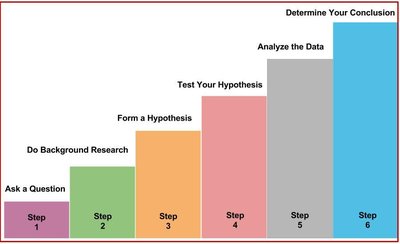
Example: The discovery of iodine as a treatment for goiter followed these steps, from initial observation (seaweed cures goiter) to hypothesis (iodine is the active component), experimentation (administering iodine), and public health implementation (iodized salt).
Tools for Healthful Eating
Evidence-Based Approach to Nutrition
An evidence-based approach to nutrition involves systematically reviewing scientific evidence to develop dietary guidelines and recommendations. This process includes:
Defining the problem or uncertainty
Formulating research questions or hypotheses
Setting criteria for quality evidence
Evaluating and summarizing research findings
Making decisions and disseminating findings
Major organizations such as the Food and Nutrition Board, USDA, and HHS use this approach to set standards like the Dietary Reference Intakes (DRIs).
Science of Nutrition
Types of Scientific Studies in Nutrition
Nutrition research employs various study designs, each with unique strengths and limitations. Understanding these is crucial for interpreting research findings.
Type | Description | Example | Notes |
|---|---|---|---|
Observational Studies | Observe subjects without intervention | Do people who eat low saturated fat have less heart disease? | Can show associations, not causation |
Experimental Studies (Interventional) | Introduce a treatment to one group, compare to control | Do calcium supplements reduce osteoporosis? | Can show causation; randomization and blinding increase reliability |
Animal Studies | Use animals to test hypotheses | Does a drug lower blood pressure in rats? | Preliminary data; ethical considerations differ |
In Vitro Studies | Use cells or molecules in lab settings | Does a drug cross a cell membrane? | Cannot predict effects in whole organisms |
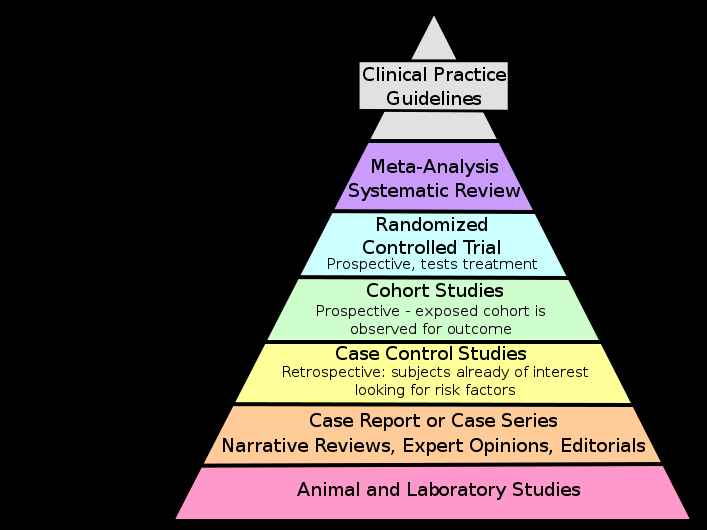
Additional info: The hierarchy of evidence ranks study types by reliability, with meta-analyses and systematic reviews at the top, followed by randomized controlled trials, cohort studies, and so on.
Observational Studies: Prospective and Retrospective
Observational studies can be prospective (following healthy subjects over time) or retrospective (comparing those with a disease to matched controls). While they can identify associations, they cannot establish causation.
Prospective (Cohort) Study: Follows a group over time to observe outcomes.
Retrospective (Case-Control) Study: Compares individuals with a condition to those without, looking back at exposures.
Experimental Studies
Experimental (interventional) studies test whether a treatment or intervention causes a specific outcome. Randomization and blinding are key features that reduce bias. The gold standard is the randomized, double-blind, placebo-controlled trial.
Animal and In Vitro Studies
These studies provide preliminary data on safety and mechanisms but may not translate directly to humans.
The Human Body & Digestion
Nutritional Assessment: The ABCD Methods
Nutritional assessment determines if individuals or populations are well-nourished or malnourished. The ABCD methods include:
Anthropometry: Measurement of body size, weight, and proportions (e.g., height, weight, skinfold thickness).
Biochemical Methods: Laboratory analysis of blood, urine, or tissues (e.g., blood glucose measurement).
Clinical Methods: Physical examination for signs of nutrient deficiencies or toxicities.
Dietary Methods: Assessment of food and nutrient intake (e.g., 24-hour recall, food frequency questionnaire, food diary).


Science of Nutrition
Evaluating Nutrition Research and Media
Critical evaluation of nutrition information is essential. Reliable sources are peer-reviewed journals and reputable organizations (e.g., USDA, AND, CDC). When reading nutrition news, consider:
Is the study published in a peer-reviewed journal?
Are the methods and sample size clearly described?
Are the subjects relevant to your population?
Is the finding supported by multiple studies?
Is the information current and well-documented?
The ABCD criteria for evaluating websites: Authority, Bias, Currency, Documentation.
Types of Scientific Publications
Primary Source: Original research articles by the investigators.
Secondary Source: Reviews or summaries of primary research (e.g., systematic reviews, meta-analyses).
Tertiary Source: Summaries of secondary sources (e.g., textbooks, encyclopedias).
News/Magazine Articles: Not peer-reviewed; least reliable.
Research Design and Strength of Evidence
The strength of evidence increases from animal and laboratory studies to clinical practice guidelines, with meta-analyses and randomized controlled trials providing the most reliable data for decision-making.
Statistical Analysis in Nutrition Research
Statistics help determine if study results are meaningful. Key concepts include:
Statistical Significance (p-value): Indicates the likelihood that results are due to chance. A p-value < 0.05 is generally considered significant.
Odds Ratio (OR), Relative Risk (RR), Hazard Ratio (HR): Measure the strength of association between exposure and outcome. Values <1 indicate reduced risk; >1 indicate increased risk.
Confidence Interval (CI): A range of values within which the true effect likely falls. A narrow CI indicates more precise results.
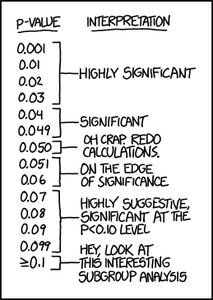
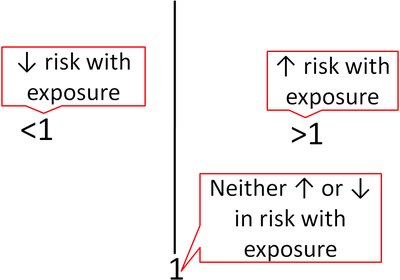
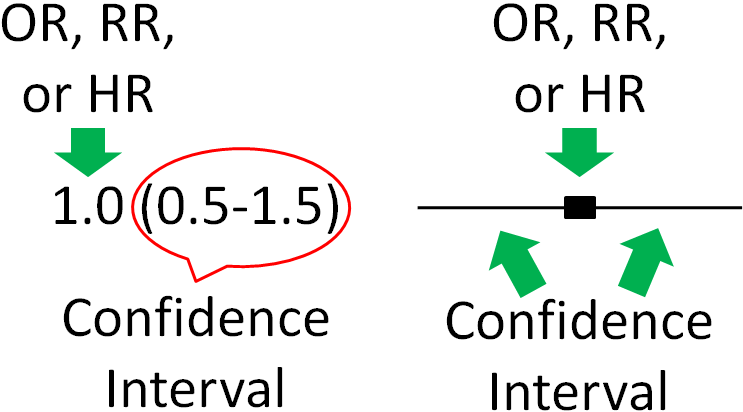
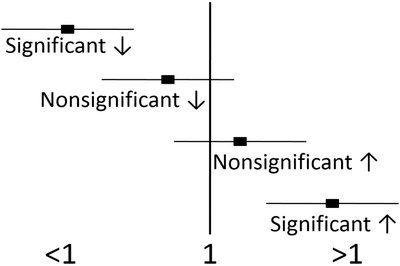
Example: An OR of 0.5 (95% CI: 0.3–0.8) means the treatment group had half the risk of the outcome compared to controls, and the result is statistically significant if the CI does not include 1.0.
Summary
Nutrition science is built on the scientific method, critical evaluation of evidence, and rigorous assessment of nutritional status. Understanding study designs, statistical analysis, and the hierarchy of evidence is essential for interpreting research and making informed nutrition decisions.
