 Back
BackNutrition: Food for Health – Foundations and Applications
Study Guide - Smart Notes
 Tailored notes based on your materials, expanded with key definitions, examples, and context.
Nutrition: Food for Health
What is Nutrition?
Nutrition is the scientific study of the interactions between living organisms and the food they consume. It encompasses the identification, classification, and physiological roles of nutrients, as well as the impact of dietary choices on health and disease.
Nutrients: Chemical substances in foods that are essential for growth, maintenance, and regulation of body processes.
Essential nutrients: Nutrients that must be obtained from the diet because the body cannot synthesize them in sufficient amounts.
Non-essential nutrients: Nutrients that the body can synthesize as needed.
Characteristics of the Canadian Diet
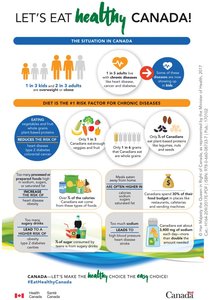
The modern Canadian diet is influenced by convenience, cost, and lifestyle factors, which can impact overall health and risk for chronic diseases.
The Modern Canadian Food Supply
There has been a shift towards increased consumption of processed and convenience foods, which are often higher in calories, fats, and sugars, and lower in essential nutrients.

Convenience and Its Costs
Choosing convenience foods over home-prepared meals can lead to higher financial costs and increased caloric intake, contributing to overweight and obesity.

Nutrition and Chronic Disease
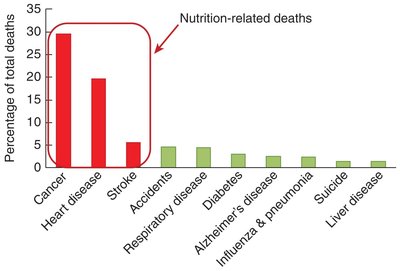
Poor dietary choices are a major risk factor for chronic diseases such as heart disease, cancer, and stroke. Nutrition-related deaths account for a significant proportion of total mortality in Canada.
Categorizing Nutrients
Classes of Nutrients
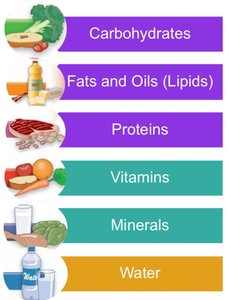
Nutrients are classified based on their chemical composition and physiological roles:
Organic nutrients: Contain carbon (e.g., carbohydrates, lipids, proteins, vitamins).
Inorganic nutrients: Do not contain carbon (e.g., water, minerals).
Macronutrients: Needed in large amounts (carbohydrates, lipids, proteins, water).
Micronutrients: Needed in small amounts (vitamins, minerals).
Composition of the Human Body
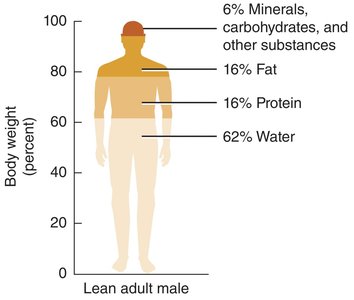
The human body is primarily composed of water, fat, protein, and minerals. The proportions of these components are essential for maintaining health and physiological function.
Macronutrients
Carbohydrates
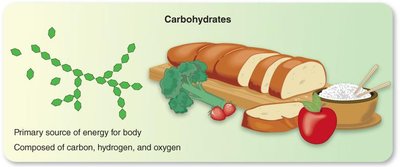
Carbohydrates are the primary source of energy for the body. They are classified as simple (sugars) or complex (starches and fiber). Fiber is a type of carbohydrate that does not provide energy but is important for digestive health.
Simple carbohydrates: Found in table sugar, fruits, and milk.
Complex carbohydrates: Found in grains and vegetables.
Fibre: Indigestible component that aids in digestive health.
Lipids (Fats and Oils)
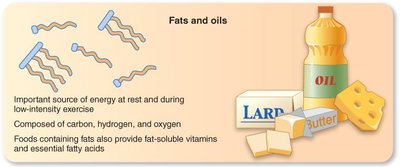
Lipids are a concentrated source of energy and are important for the absorption of fat-soluble vitamins and essential fatty acids. They are composed of carbon, hydrogen, and oxygen.
Fats and oils: Provide energy at rest and during low-intensity exercise.
Essential fatty acids: Must be obtained from the diet.
Proteins
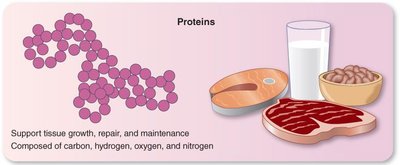
Proteins are essential for tissue growth, repair, and maintenance. They are composed of amino acids, which contain carbon, hydrogen, oxygen, and nitrogen.
Sources: Meat, dairy, legumes, and some grains.
Functions: Structural components, enzymes, hormones, and immune function.
Water
Water is the most abundant component of the human body and is required in large amounts daily. It does not provide energy but is essential for all physiological processes.
Functions: Solvent, temperature regulation, transport of nutrients and waste, chemical reactions.
Micronutrients
Vitamins
Vitamins are organic compounds required in small amounts for normal metabolism. They are classified as fat-soluble (A, D, E, K) or water-soluble (B vitamins, C).
Fat-soluble vitamins: Stored in body fat and liver.
Water-soluble vitamins: Not stored in the body; excess excreted in urine.
Minerals
Minerals are inorganic elements essential for various physiological functions. They are classified as major minerals (needed in larger amounts) and trace elements (needed in smaller amounts).
Major minerals: Calcium, phosphorus, potassium, sodium, chloride, magnesium, sulfur.
Trace elements: Iron, zinc, copper, manganese, iodine, selenium, etc.
Energy in Food
Measuring Energy
Energy is the capacity to do work and is measured in kilocalories (kcal) or kilojoules (kJ). One kilocalorie is the amount of heat needed to raise 1 kg of water by 1°C.
1 kcal = 4.185 kJ
1 kcal = 1 Calorie (with a capital C)
Energy Provided by Macronutrients
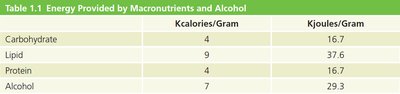
Macronutrient | Kcal/Gram | KJ/Gram |
|---|---|---|
Carbohydrate | 4 | 16.7 |
Lipid | 9 | 37.6 |
Protein | 4 | 16.7 |
Alcohol | 7 | 29.3 |
Calculating Energy Content of Foods
To calculate the total caloric content of a food, multiply the grams of each macronutrient by its respective energy value and sum the results.
Fat: 8 g × 9 kcal/g = 72 kcal
Protein: 20 g × 4 kcal/g = 80 kcal
Carbohydrate: 30 g × 4 kcal/g = 120 kcal
Total: 272 kcal
Functions of Nutrients
Providing Energy
Macronutrients provide energy for maintaining body functions and fueling physical activity. Excess energy intake leads to weight gain.
Forming Structures
Nutrients such as water, fat, and protein form and maintain the body's shape and structure. Proteins are key components of muscles, ligaments, and tendons, while lipids are essential for cell membranes.
Regulating Body Processes
Nutrients regulate metabolic reactions and help maintain homeostasis. Each nutrient plays a specific role in speeding up or slowing down metabolic processes.
Summary Table: Functions of Nutrients
Function | Nutrient | Example |
|---|---|---|
Energy | Carbohydrate | Glucose provides energy to body cells. |
Energy | Lipid | Fat is the most plentiful source of stored fuel. |
Energy | Protein | Excess protein is used for energy. |
Structure | Lipid | Principal component of cell membranes. |
Structure | Protein | Connective tissue holds bones and muscles together. |
Structure | Minerals | Calcium and phosphorus harden teeth and bones. |
Regulation | Lipid | Estrogen regulates the female reproductive cycle. |
Regulation | Protein | Leptin regulates body fat stores. |
Regulation | Carbohydrate | Sugar chains signal protein removal in blood. |
Regulation | Water | Sweat cools the body. |
Regulation | Vitamins | B vitamins regulate macronutrient use for energy. |
Regulation | Minerals | Sodium regulates blood volume. |
Malnutrition
Undernutrition vs. Overnutrition
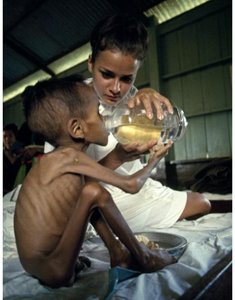
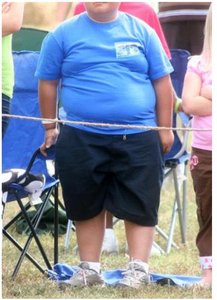
Malnutrition refers to both undernutrition (insufficient intake of nutrients) and overnutrition (excess intake of nutrients, leading to overweight and obesity).
Diet, Genes, and Food Choices
Diet and Genes
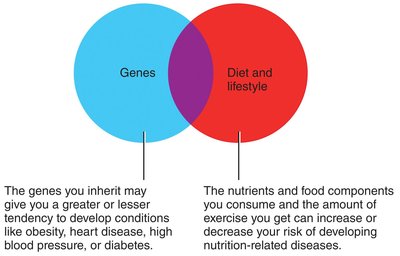
Both genetic factors and dietary choices influence the risk of developing nutrition-related diseases. Genes may predispose individuals to certain conditions, while diet and lifestyle can modify these risks.
Factors Influencing Food Choices
Food choices are influenced by availability, cultural and personal background, income, health status, and psychological factors.

Nutrient Density
Definition and Application
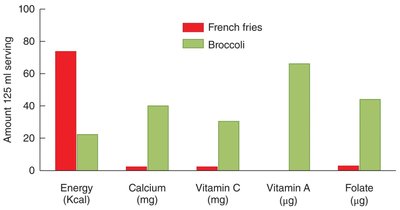
Nutrient density is a measure of the amount of nutrients a food provides relative to its energy content. Foods with high nutrient density provide more vitamins and minerals per calorie.
Example: Broccoli is more nutrient-dense than French fries, providing more vitamins and minerals per calorie.
Principles of a Healthy Diet
Variety and Balance
A healthy diet includes a variety of foods to ensure adequate intake of all nutrients and balance among macronutrients and micronutrients.
Nutrition as a Science
The Scientific Method in Nutrition
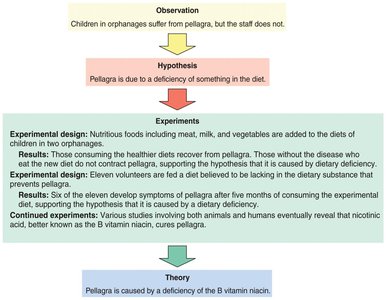
Nutrition is an evidence-based science that uses the scientific method to investigate the relationship between diet and health. The process involves observation, hypothesis formation, experimentation, and theory development.
Types of Nutrition Research Studies
Randomized controlled trials: Participants are randomly assigned to treatment or control groups.
Observational studies: Epidemiological studies that examine associations between diet and health outcomes.
Prospective cohort studies: Follow groups of people over time to assess dietary patterns and disease risk.
Balance studies: Measure nutrient intake and excretion to determine requirements.
Assessing Nutrition Research Information
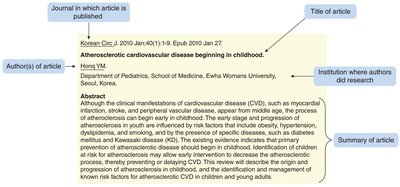
Peer-reviewed publications are the gold standard for disseminating nutrition research. Key sections include the abstract, introduction, materials and methods, results, discussion, and bibliography.
Critical Thinking in Nutrition
When evaluating nutrition information, consider the source, study design, consistency with other research, and whether claims are evidence-based or anecdotal. Be cautious of claims that promise quick fixes or seem too good to be true.
